
Caregiver vs. Family: Why Seniors Act Differently in London
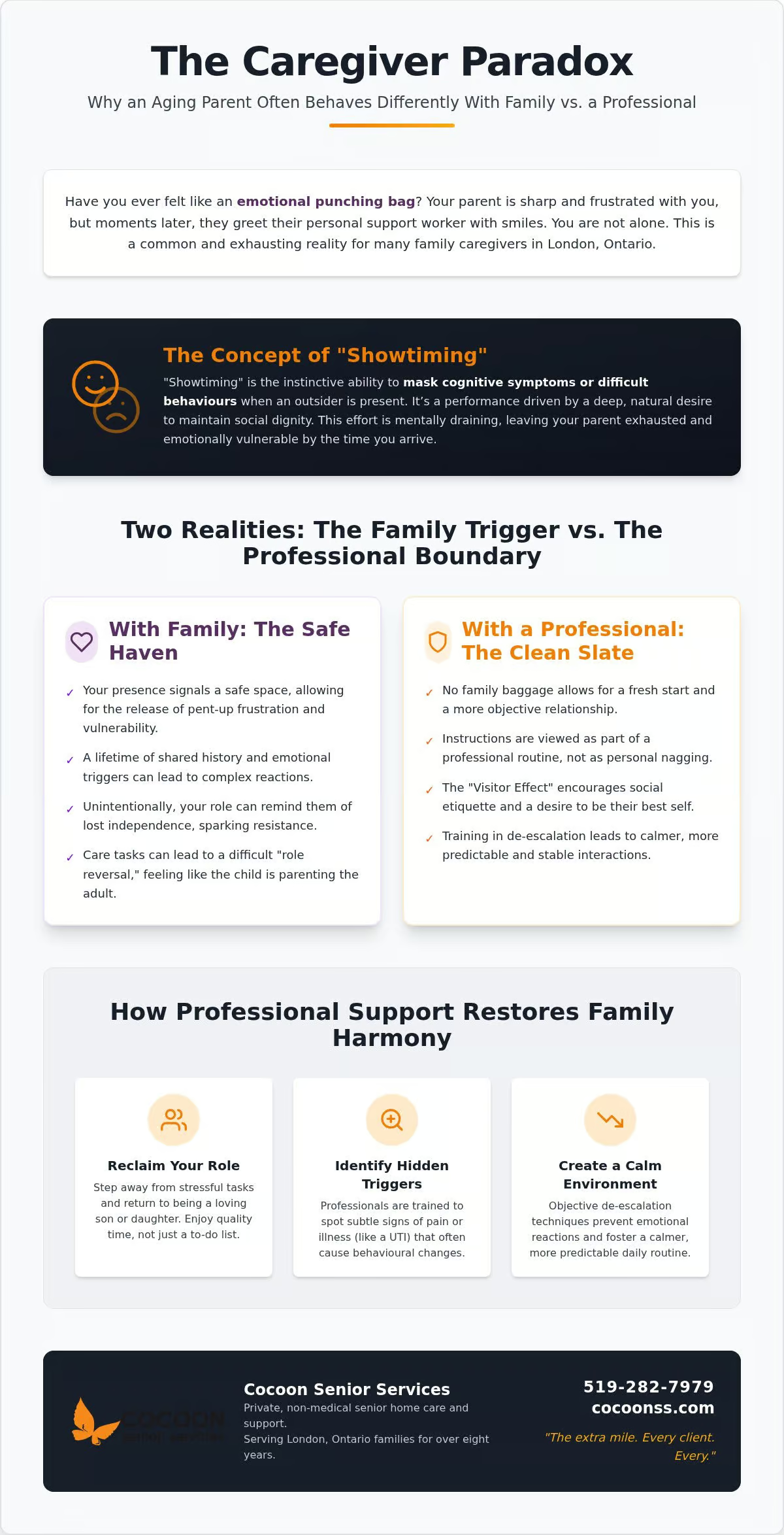
You’ve just finished a long day in London, only to be met with sharp words and frustration from your mother, yet moments later, she’s all smiles and “thank you” for her personal support worker. It leaves you wondering, “Why does my aging parent behave differently with me than with a caregiver?” and often brings a heavy wave of caregiver guilt. You aren’t alone in feeling like an emotional punching bag while others see a perfectly pleasant version of your loved one. This exhausting reality is a common phenomenon that we see often in our community.
This article explains the psychological reasons behind this “caregiver paradox” and how professional support can help you step back from the conflict. We will explore why this shift happens and offer practical strategies to restore your role as a son or daughter, allowing you to find peace and harmony in your relationship once again.
Key Takeaways
- Uncover the concept of “showtiming,” where seniors instinctively maintain social dignity with new faces by masking their symptoms or frustrations.
- Understand the answer to “Why does my aging parent behave differently with me than with a caregiver?” by exploring the unique emotional safety they feel only with family.
- Learn how the “clean slate” advantage of a professional caregiver helps de-escalate resistance that often stems from decades of complex family history.
- Discover how accepting private support allows you to step away from clinical tasks and return to being the son or daughter your parent needs.
Understanding the ‘Caregiver Paradox’ and the Concept of Showtiming
In our eight years of serving London families at Cocoon Senior Services, we’ve often heard a pained, whispered question: “Why does my aging parent behave differently with me than with a caregiver?” This phenomenon is known as showtiming. It is the instinctive, fleeting ability of a senior to mask cognitive symptoms or difficult behaviours when an outsider enters the room. They perform for the professional caregiver because of a natural, deeply rooted desire to maintain dignity. To a visitor, they want to appear capable and socially poised.
Masking requires immense mental energy. By the time you walk through the door, their reserves are often depleted. This exhaustion leads to an emotional release that falls squarely on your shoulders. It is vital to recognize that this isn’t a lack of affection or a personal slight. The heavy weight of caregiver burden often stems from being the only one who witnesses the unfiltered, difficult reality while others see a calm facade.
Why Your Presence Triggers the ‘Real’ Behaviour
Your arrival signals a safe haven. Much like a child who holds back tears all day at school only to crumble in a parent’s arms, seniors vent their frustrations to those they trust most. You represent a lifetime of roles and shared history. Sometimes, your very presence reminds them of a lost sense of independence, which can trigger resistance or anger. This isn’t calculated manipulation. It is often a genuine inability to regulate emotions caused by cognitive changes. They aren’t trying to push you away. They are finally in a space where they feel safe enough to be vulnerable.
The Professional Boundary: Why Caregivers Succeed Where Families Struggle
Professional caregivers in London offer a distinct advantage: the clean slate. When a personal support worker enters the home, they don’t carry decades of family baggage or emotional triggers. This lack of history allows for a fresh start. Many families often ask us, “Why does my aging parent behave differently with me than with a caregiver?” The answer often lies in avoiding a role reversal that feels undignified to the senior. While a daughter’s advice might feel like nagging, a caregiver’s instruction is simply seen as part of a professional routine.
Our team is trained to use objective observation to spot physical triggers that families might overlook. In London and St. Thomas, we often identify subtle signs of pain or a brewing UTI before they escalate into behavioural outbursts. Professional training allows us to use specific de-escalation techniques rather than reacting with the emotional intuition of a relative. This objective distance creates a calmer, more predictable environment.
The Therapeutic Value of the ‘Caregiver Persona’
Professional distance reduces the senior’s feeling of being parented by their own child. This “Visitor Effect” means social etiquette remains intact longer with non-family members. They naturally want to be their best self for the “guest.” For those navigating cognitive changes, our Specialized Dementia & Alzheimer’s Care provides the specific tools needed to manage these shifts gracefully. If you feel overwhelmed, exploring private home care support can help restore your family dynamic.
Restoring the Parent-Child Bond Through Professional Support
Restoring your relationship begins with a single, vital step: accepting help. It’s nearly impossible to be both a clinical nurse and a loving daughter without experiencing deep burnout. When you try to manage the complexities of family caregiving alone, your role as a child often disappears under the weight of medical tasks. By bringing in professional support, you can finally reintroduce quality time. Use those hours when a caregiver is present to simply sit, enjoy a cup of tea, and listen to stories instead of checking off a stressful to-do list.
Effective support requires open communication. Share the specific patterns you’ve noticed with your care team. Your insights help us tailor our approach to suit your parent’s unique personality. It’s also important to monitor the transition with patience. Whether you’re in London or Port Stanley, it takes time for a senior to adjust to a new face. During this period, you might still ask, “Why does my aging parent behave differently with me than with a caregiver?” but you’ll soon see that this difference is what allows your relationship to heal.
Moving from Crisis Management to Compassionate Connection
The true goal of home care is to preserve your parent’s independence while protecting your own mental health. At Cocoon Senior Services, we act as the social bridge that lets you step back from the stress of daily care and return to being the son or daughter. We provide the extra mile of support to bridge the emotional gaps that tasks alone cannot fill. If you’re ready to move from crisis to connection, call 519-282-7979 for a private consultation to discuss your family’s unique situation.
The extra mile. Every client. Every.
Reclaiming Your Role as a Loving Child
Navigating the complex emotions of aging can feel like a lonely journey. Understanding the caregiver paradox helps you realize that showtiming is a natural response; it is not a rejection of your care. Professional boundaries provide a sense of security and structure that family history can sometimes complicate. By stepping back from the role of the clinical provider, you create space for genuine connection. If you’ve wondered, “Why does my aging parent behave differently with me than with a caregiver?” know that this shift is the first step toward healing. Don’t wait for a crisis to find support. Contact Cocoon Senior Services today to restore your bond. With over eight years of experience in London and St. Thomas, our certified dementia and Alzheimer’s care specialists are here to walk this path with you.
The extra mile. Every client. Every.
Frequently Asked Questions
Is it normal for my parent to be mean to me but nice to everyone else?
Yes, this is an extremely common experience for family members in London. You are your parent’s “safe haven,” which means they feel secure enough to release their unfiltered frustrations, fear, or pain with you. While it feels like you’ve become a punching bag, it is actually a sign of the deep emotional trust they have in your relationship.
What is ‘Showtiming’ in seniors with dementia?
Showtiming occurs when a senior “rallies” their mental energy to appear more alert and capable for visitors or professionals. This masking is often the reason families ask, “Why does my aging parent behave differently with me than with a caregiver?” They maintain social dignity for the “guest” but lack the stamina to keep that facade up once they are alone with you.
How do I stop taking my parent’s hurtful comments personally?
Recognize that hurtful words are often a symptom of cognitive change rather than a personal attack. When the brain’s filters weaken, frustration over lost independence often comes out as anger toward those closest to them. Shifting your focus to the disease allows you to maintain your own peace. Our team in St. Thomas provides the support needed to help you manage these difficult moments.
Will hiring a caregiver make my parent feel like I’m abandoning them?
In our experience, professional help actually strengthens the bond between you and your parent. By having a dedicated caregiver handle personal care or household support, you can stop being the “enforcer” of rules. This transition allows you to return to being a loving companion in London or Port Stanley, spending your time together on meaningful connection rather than stressful care tasks.
The extra mile. Every client. Every.
Disclaimer
We aim to provide helpful guidance for seniors and families, but this content should not replace professional medical advice. Some links may be affiliate links, and we are not responsible for third-party content.