
When Seniors Go Missing: London & St Thomas Safety Guide
Last Tuesday, a local daughter looked up from her coffee to find the back door slightly ajar and her father’s favourite chair empty. It’s the silent, heart-stopping moment that defines the anxiety many caregivers in our community face. When older adults go missing, the home that once served as a sanctuary of peace suddenly feels fragile. You aren’t alone in this fear. The weight of keeping a loved one safe while respecting their dignity is a heavy one to carry, especially when you can’t be there every second of the day.
I want to help you replace that constant worry with a sense of calm and control. You’ll learn the critical reasons why seniors wander and discover practical, local strategies to keep your loved ones safe here in London and St. Thomas. We’ll explore the specific triggers behind these episodes, the local emergency protocols you must know, and how professional support can restore the quiet rhythm of safety to your home.
Key Takeaways
- Understand that when older adults go missing, it is often a silent attempt to communicate an unmet need like hunger or a desire for comfort.
- Learn how simple environmental adjustments, such as using contrasting colours for doorknobs, can create a safer and more predictable home sanctuary.
- Discover the calming power of a consistent daily routine in reducing the underlying anxiety that frequently triggers wandering and elopement.
- See how professional companionship and vigilant monitoring can address boredom and prevent a crisis before an exit-seeking event occurs.
The Reality of Wandering: Why Older Adults Go Missing
Wandering is rarely a random act. It is often a quiet, desperate attempt to communicate a basic human need. When we see a senior moving restlessly, they might be thirsty, hungry, or simply yearning for the comfort of a home that exists in their memory. Understanding The Reality of Wandering helps us see the person, not just the behaviour. Alzheimer’s physically alters the brain’s ability to process spatial awareness and time. A familiar hallway can suddenly feel like a foreign labyrinth, leaving them untethered from their surroundings.
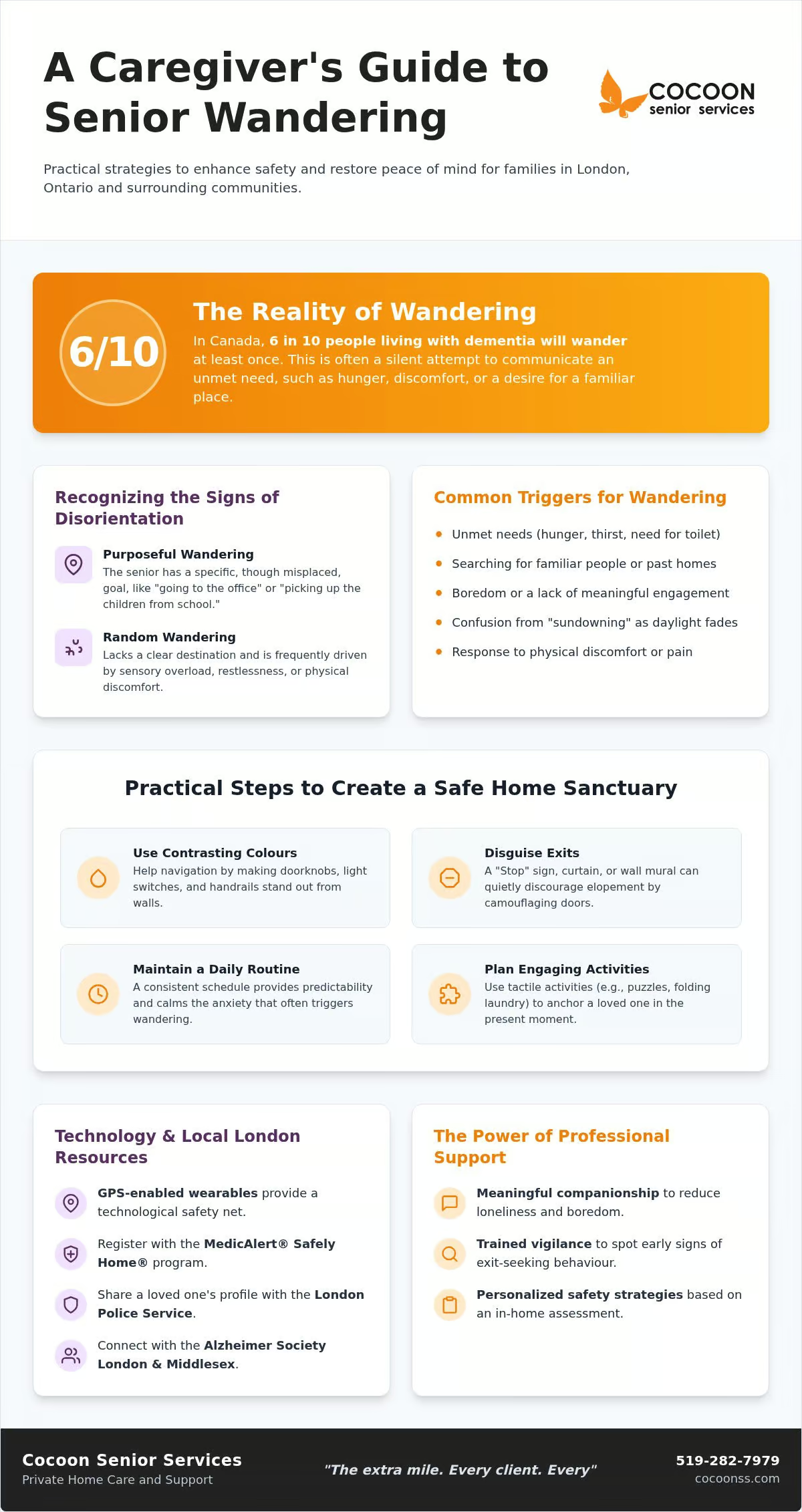
In Ontario, the stakes for families are incredibly high. Current data indicates that 6 in 10 people living with dementia will wander at least once. With approximately 772,000 Canadians currently navigating dementia, the fear that occurs when older adults go missing is a heavy, shared reality for many in London and St. Thomas. This risk frequently intensifies during “sundowning.” As the afternoon light fades, it triggers a surge of confusion and an urgent, misplaced desire to “go home” or find a sense of security that feels just out of reach.
Recognizing the Subtle Signs of Cognitive Disorientation
Restlessness is often the first whisper of a safety concern. You might notice a loved one returning from their usual neighbourhood walk much later than expected, or perhaps they’ve forgotten the route to the local grocery store they’ve visited for years. It’s helpful to distinguish between two types of movement:
- Purposeful wandering: The senior has a specific, albeit misplaced, goal, such as trying to “get to the office” or “pick up the kids.”
- Random wandering: This lacks a clear destination and is often driven by sensory overload or physical discomfort.
Identifying these early shifts in patterns allows us to provide a gentle layer of protection before a simple walk turns into a search.
Practical Steps to Secure the Home and Enhance Safety
Creating a true sanctuary at home requires more than just sturdy locks; it involves thoughtful, visual cues that guide the spirit. Implementing Practical Steps to Secure the Home, such as using doorknobs in contrasting colours, can help a senior navigate their space with confidence. Conversely, placing a simple “Stop” sign on an exit door or hanging a soft curtain over the front entrance can quietly discourage elopement. These “disguised exits” transform a potential point of exit into a neutral part of the room, reducing the visual urge to leave.
Routine serves as the heartbeat of emotional safety. A consistent daily rhythm provides a sense of predictability that lowers the anxiety often leading to wandering. We have observed that the late afternoon is frequently a high-risk window for families in our community. Planning engaging, tactile activities during these hours can anchor a loved one in the present moment. If you’re finding these transitions difficult to manage alone, our dementia care support offers the professional presence needed to maintain this delicate balance.
Utilizing Technology and Local London Resources
Modern technology offers a gentle safety net for families. GPS-enabled wearables provide real-time peace of mind, provided they are used with a deep respect for the individual’s privacy. In the London and St. Thomas area, registering with the MedicAlert Safely Home program is a vital proactive measure. It’s also wise to share your loved one’s profile with the London Police Service early on. Connecting with the Alzheimer Society of London and Middlesex provides access to specialized education, ensuring you are never alone when older adults go missing.
Professional Support: How Constant Vigilance Prevents Crisis
Loneliness is a quiet catalyst. Often, the urge to wander isn’t born from a desire to leave, but from a need to find connection or purpose. Professional companionship addresses this at its root. By engaging in meaningful conversation or shared activities, we provide the mental stimulation that anchors a senior to their immediate environment. This proactive engagement is vital because when older adults go missing, it often follows a period of restlessness or boredom that went unnoticed by a busy family.
Our caregivers are trained to recognize the subtle, early signs of exit-seeking behaviours. This might be a repetitive checking of the front door or a sudden preoccupation with “getting to the office.” We intervene with grace, redirecting that energy into a calming task before it escalates. For families in London, St. Thomas, and Port Stanley, our personalized care plans offer a bridge of safety. You can find more context on integrating these supports in our guide to Senior Home Care Services in London, Ontario.
Developing a Personalized Safety Strategy with Cocoon
Every home has its own unique rhythm and challenges. We begin with a free in-home assessment to identify specific triggers in your environment, such as confusing shadows or unsecured exits. This process isn’t about creating a restrictive space. It’s about maintaining independence and dignity through a watchful, professional presence. We believe that safety shouldn’t feel like a loss of freedom. To discuss dementia-specific support tailored to your family’s needs, please contact our team at 519-282-7979. We are here to walk the extra mile with you.
Restoring Peace of Mind to Your Home Sanctuary
Transforming your home into a safe haven starts with understanding the quiet needs behind the movement. It is a journey of patience. By blending gentle environmental shifts with the proactive support of local London resources, you create a layer of protection that honours your loved one’s dignity. We know the anxiety that surfaces when older adults go missing; however, you don’t have to navigate this path alone. Our award-winning team of certified Alzheimer’s care professionals has spent over eight years serving families in our community with a commitment to emotional security. If you are worried about a loved one wandering, do not wait for a crisis. Contact Cocoon Senior Services today for a compassionate consultation. You deserve the quiet confidence that comes from knowing they are safe and truly seen.
The extra mile. Every client. Every
Frequently Asked Questions
What is the first thing I should do if my parent goes missing in London?
Call 911 immediately if you discover your loved one is gone. You don’t need to wait 24 hours; police in London and St. Thomas prioritize missing seniors as high-priority emergencies. Tell the dispatcher specifically that the person has dementia or Alzheimer’s. Having a recent photo and a list of their favourite former locations ready helps officers begin a focused search right away.
How can I prevent my spouse with dementia from wandering at night?
Nighttime safety often depends on grounding the senses before confusion sets in. Consider installing pressure-sensitive floor mats or bed alarms that alert you the moment your spouse leaves their bed. Keeping the hallway well-lit and the bedroom free of mirrors can reduce the visual hallucinations that trigger fear. A predictable evening routine helps lower the anxiety that often leads to a desire to leave.
Are there local resources in St. Thomas or London for missing seniors?
Our community is supported by the Alzheimer Society London and Middlesex, which provides the Safely Home® Wandering Registry. This program helps police identify individuals quickly. You can also register with the MedicAlert Safely Home program. These local resources provide a vital safety net for families when older adults go missing, ensuring that London and St. Thomas emergency services have the information needed to bring them home.
Why do seniors with Alzheimer’s suddenly start wandering after years of being fine?
Wandering can start unexpectedly because the brain’s ability to process surroundings changes as dementia progresses. A senior might suddenly lose the ability to recognize their own living room; this triggers a desperate search for a place that feels “right.” It often stems from a new physical discomfort, a change in medication, or simply a deep, underlying boredom that professional companionship is designed to address.
Disclaimer
We aim to provide helpful guidance for seniors and families, but this content should not replace professional medical advice. Some links may be affiliate links, and we are not responsible for third-party content.