

Parent Refuses Memory Talk? Advice for London & St Thomas
You notice the kettle whistling on a dry stove or a stack of unopened mail on the counter, yet the moment you mention it, the room turns cold. It’s a heartbreaking dance many families in London and St. Thomas know well. You feel like a spy in your own childhood home, torn between the need to keep them safe and the desire to honour their dignity. It’s exhausting when you realize, “My parent is forgetting things but refuses to discuss it,” but there’s a way to bridge that gap without losing the relationship you cherish.
This guide explores why your parent might be pushing back and offers gentle, local strategies to introduce support while keeping their independence intact. We’ll look at how small shifts in care can provide a sense of sanctuary rather than a loss of control. Understanding the root of their resistance is the first step toward finding peace for your entire family.
Key Takeaways
- Learn to distinguish between psychological denial and anosognosia, helping you understand why “my parent is forgetting things but refuses to discuss it” as a biological reality rather than a choice.
- Discover how to time your conversations for the “green zone” and use neutral third-party observations to lower defensiveness and keep the dialogue calm.
- Identify the subtle red flags, such as missed medications or unpaid bills, that indicate it is time to transition from conversation to gentle action.
- Explore how lifestyle support in London, Ontario, can introduce help through non-threatening tasks like meal prep, preserving your parent’s dignity and independence.
Understanding the “Why” Behind the Refusal: Is it Denial or Something More?
It is a quiet, heavy burden when you realize, “My parent is forgetting things but refuses to discuss it.” You see the scorched pan or the missed appointment, but when you gently bring it up, they shut down or lash out. This tension isn’t a lack of respect or a choice to be difficult. It is a complex intersection of fear and biology that requires a new kind of patience and understanding.
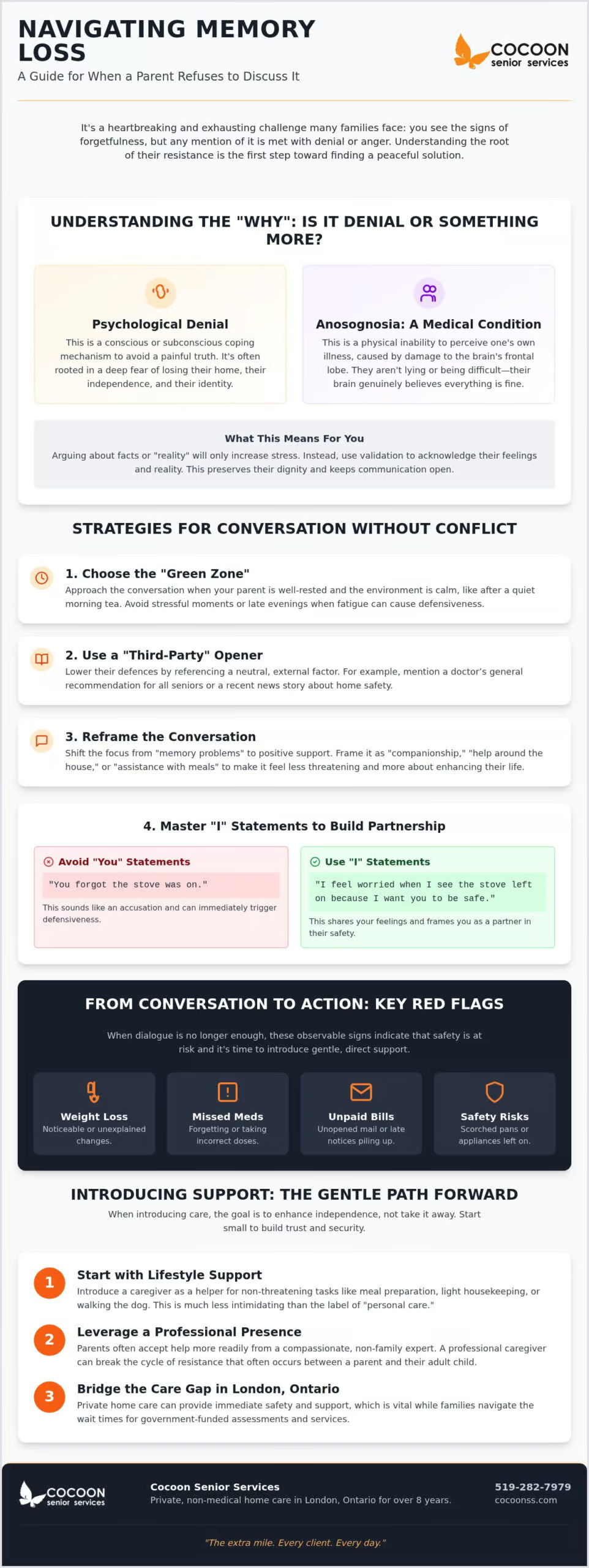
We must distinguish between psychological denial and a clinical condition called Anosognosia: Unaware of Their Own Condition. While denial is a coping mechanism used to avoid painful truths, anosognosia is a physical result of damage to the brain’s frontal lobe. This specific area handles self-monitoring. When it’s damaged, a parent physically cannot recognize their own cognitive slips. They aren’t lying to you; their brain is simply convinced that everything is functioning perfectly.
In our eight years of supporting families in London and St. Thomas, we’ve seen how this defensiveness is often a shield for a deep, unspoken fear. They worry that admitting to memory loss means losing their beloved home and their independence. To them, your concern feels like a threat to their sanctuary. Validating this fear, rather than fighting the forgetfulness, is where healing begins.
Anosognosia: Why They Truly Cannot See the Forgetting
Anosognosia is a physiological inability to realize one has a cognitive impairment. Arguing about the “truth” of a memory only increases their cortisol levels, which triggers a fight-or-flight response. Instead of using “reality orientation” that forces them to face mistakes they cannot perceive, try validation therapy. This approach meets them in their current reality, preserving their dignity while keeping the peace at home.
Strategies for Having the Conversation Without the Conflict
Approaching the subject of cognitive change requires a delicate touch. If you feel that “my parent is forgetting things but refuses to discuss it,” timing is your most valuable tool. Choose the “green zone,” a window when your parent is well-rested, perhaps after a quiet morning tea, and the house feels calm. Avoid bringing up concerns during stressful moments or late in the evening when fatigue sets in.
Using a “Third-Party” technique can also lower defences. Instead of making it personal, blame a neutral factor. You might mention a recent news story or follow expert advice on talking about memory loss by citing a doctor’s general recommendation for seniors. Shifting the focus from “memory” to “household support” or “companionship” often feels less threatening. Suggesting a “trial period” for private senior home care allows them to feel in control, rather than facing a permanent life change.
The “I” Statement Approach: Shifting the Focus to Your Peace of Mind
When we use “you” statements, it often sounds like an accusation. Phrases like “You forgot the stove” trigger an immediate need to defend competence. Instead, try “I” statements to share your own heart. “I feel worried when I see the stove left on because I want you to be safe.” This positions you as a partner rather than a critic. Remind them that your goal is a shared one: “I want to help you stay in this beautiful home for as long as possible.” This partnership creates a sanctuary of safety instead of a battleground of facts.
When and How to Introduce External Support in London, Ontario
Sometimes, despite our best efforts, the time for talking passes. When you find yourself repeating the phrase, “My parent is forgetting things but refuses to discuss it,” it’s time to observe the subtle shifts in their environment. Noticeable weight loss, missed medication doses, or a mounting stack of unpaid bills are clear red flags that safety is now at risk. At this stage, moving from dialogue to action becomes a necessary act of love. You can find structured help in this family conversation guide for memory loss to help navigate these delicate transitions. In London, Ontario, private home care often bridges the vital gap while waiting for government funded assessments through organizations like Home and Community Care Support Services. This ensures your loved one remains safe in their own sanctuary while you navigate the local healthcare landscape.
Starting Small with Lifestyle Support: The Cocoon Approach
We believe in a gentle, rhythmic entry into a senior’s life. If you are struggling because my parent is forgetting things but refuses to discuss it, introducing a caregiver as lifestyle support for meal preparation or walking the dog is far less threatening than the clinical label of personal care. A professional, non family face often breaks the cycle of parental resistance. Parents often accept help from a compassionate expert in a way they might struggle to accept from their own children. We provide a free in-home consultation to assess safety without the pressure of a medical setting. For a more detailed safety checklist, please read our guide on Signs Your Parent in London Needs In-Home Care. This soft start preserves their independence while quietly building a foundation of trust and security.
Creating a Sanctuary of Safety and Respect
Navigating the realization that my parent is forgetting things but refuses to discuss it requires a shift from confrontation to compassionate collaboration. By understanding the biological roots of resistance and choosing gentle, well-timed conversations, you can preserve both their safety and your relationship. Remember that introducing help doesn’t have to be a sudden upheaval. It can start with a simple meal or help with a beloved pet. As an award-winning provider serving London families for over eight years, we provide specialized dementia and Alzheimer’s care that feels like a natural extension of the home. If you are worried about a parent’s memory, do not wait for a crisis. Book a free, compassionate care consultation with Cocoon Senior Services today by calling 519-282-7979. You don’t have to walk this path alone.
The extra mile. Every client. Every
Frequently Asked Questions
How do I talk to my parent about memory loss without them getting angry?
Start by choosing a calm moment when the house is quiet and your parent is well-rested. Use “I” statements to share your feelings, such as “I feel worried when I see the stove left on,” rather than “You are forgetting things.” This approach reduces defensiveness. Framing the conversation around household support or companionship rather than medical deficits helps preserve their dignity.
What is anosognosia and how does it affect memory loss conversations?
Anosognosia is a physiological condition where damage to the brain’s frontal lobe prevents a person from recognizing their own cognitive impairment. It is not stubbornness. When you realize my parent is forgetting things but refuses to discuss it, it’s often because their brain physically cannot process the mistake. Validating their reality rather than correcting them prevents the cortisol spikes that lead to conflict.
My parent refuses to see a doctor for their memory; what can I do?
Instead of pushing for a memory assessment, suggest a general check-up to ensure they can stay in their home comfortably. You can also introduce a neutral third party for a non-medical consultation. We provide free in-home safety assessments in London and St Thomas that focus on lifestyle support. This often feels less threatening than a clinical visit focused solely on memory loss.
What are the signs that it is no longer safe for my parent to live alone in London, Ontario?
Critical red flags include scorched cookware, unexplained weight loss, or a stack of unopened utility bills. These signs indicate that cognitive changes are impacting daily safety. In London and St Thomas, we often help families transition to private home care when these risks emerge. Starting with small tasks like meal preparation or medication reminders can bridge the gap while maintaining their independence.
Disclaimer
We aim to provide helpful guidance for seniors and families, but this content should not replace professional medical advice. Some links may be affiliate links, and we are not responsible for third-party content.