

Dementia Behavior Triggers: Tips for London & St Thomas
A sudden outburst during a quiet afternoon in London can leave you feeling shaken and deeply guilty. You might wonder what you did wrong or why a simple question triggered such a sharp reaction. It’s exhausting to live in a state of constant vigilance, especially when sleep deprivation and repetitive questions have already drained your emotional reserves. Understanding dementia behaviour triggers is not about assigning blame; it’s about learning a new language. You deserve a home that feels like a sanctuary again, not a place of unpredictable tension. I promise to help you decode these moments to restore safety and peace to your household. We will explore how to identify hidden physical discomforts and environmental factors, providing you with practical tools to prevent outbursts before they begin.
Key Takeaways
- Shift your perspective to view behaviour changes as a meaningful attempt to communicate, allowing you to respond with empathy instead of frustration.
- Identify and soften common dementia behaviour triggers within your home by adjusting sensory inputs like lighting, noise levels, and visual clutter.
- Practice the “validate, don’t correct” approach to maintain a sense of emotional security and prevent moments of confusion from escalating.
- Understand how professional companionship and specialized personal care can provide the support needed to maintain a calm and safe home environment.
Why Does Behaviour Change? Decoding the Language of Dementia
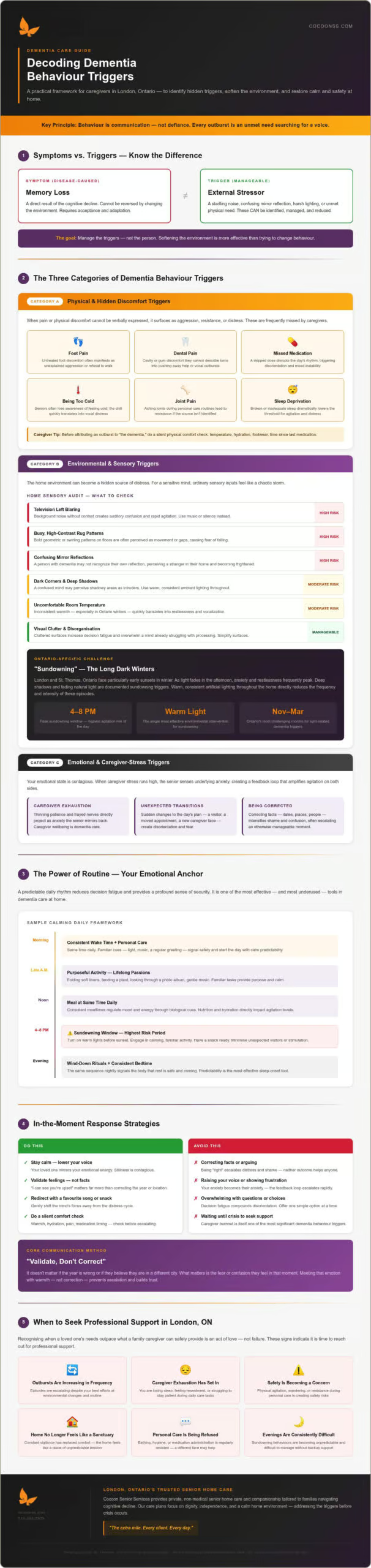
When a loved one reacts with sudden intensity, it’s natural to feel overwhelmed. We must remember that behaviour is a form of communication. For someone living with cognitive decline, words often fail. Action becomes the only way to express an unmet need or a feeling of deep unease. Dementia behaviour triggers are external or internal stimuli that cause distress or agitation. By identifying these prompts, we can transform a chaotic moment into an opportunity for connection and understanding.
It’s vital to distinguish between symptoms and triggers. Memory loss is a symptom of the disease, but a startling noise or a confusing reflection in a mirror is a trigger. Brain-based changes often lead to a loss of impulse control or reduced spatial awareness. This can make a familiar hallway feel like a frightening labyrinth. Recognizing this shift allows us to manage Agitation in dementia by softening the environment rather than trying to change the person.
Hidden Triggers: The Role of Physical Comfort and Hygiene
Sometimes the source of distress is silent. Untreated foot pain or dental discomfort often manifests as unexplained aggression in seniors. If they cannot articulate the ache in their joints or the sting of a cavity, they may push away a helping hand. Our personal care services and specialized footcare address these physical needs before they escalate into a crisis. Consistent medication reminders also play a crucial role. They help avoid the disorientation that follows a missed dose, keeping the day’s rhythm steady and predictable. Addressing these small details creates a foundation of physical peace and emotional security.
Environmental Triggers: Creating a Calming Home Space in London, ON
Your home should be a sanctuary of quiet beauty. For a loved one with cognitive loss, however, the environment often becomes a source of invisible friction. Auditing your living space for sensory overload is a vital step in managing dementia behaviour triggers. A television left blaring in the background or a rug with high-contrast, busy patterns can feel like a chaotic storm to a sensitive mind. In London and St Thomas, we face a specific seasonal challenge: our long, dark Ontario winters. As the sun dips early in the afternoon, “sundowning” anxiety often peaks. This restlessness is frequently sparked by the deep shadows and fading natural light characteristic of our region. Using warm, consistent lighting throughout the house helps eliminate dark corners that a confused mind might perceive as intruders. Maintaining a steady, comfortable temperature is equally important. Seniors often lose the ability to realize they are too cold, and that physical chill quickly translates into vocal distress.
The Power of Routine in Preventing Agitation
A predictable daily rhythm acts as an emotional anchor. It reduces decision fatigue and provides a profound sense of security when the world feels uncertain. When meal preparation happens at the same time every day, it regulates mood and energy levels naturally through biological cues. Engaging in activities for dementia patients at home that reflect their lifelong passions can turn a tense afternoon into a peaceful one. Whether it’s the tactile comfort of folding soft linens or the auditory joy of familiar music, these moments of purpose are essential. If you find the evening hours particularly difficult to navigate, professional specialized home support can help maintain this vital harmony before a crisis occurs.
Responding to Challenging Moments: Practical Strategies for Caregivers
When tension rises, your first response is your most powerful tool. Remain calm and keep your voice low. Your loved one will often mirror your emotional energy; if you project stillness, they are more likely to find it themselves. Validate their feelings rather than correcting their facts to avoid unnecessary arguments. It doesn’t matter if the year is wrong or if they believe they are in a different city. What matters is the fear or confusion they feel in that moment.
If an outburst begins, use distraction or redirection to break the cycle of agitation. Shifting the focus to a favourite song or a simple snack can gently guide the mind away from the distress. It’s also vital to realize that your own fatigue can become one of the most significant dementia behaviour triggers. When you are emotionally exhausted, your patience thins, and the senior often senses that underlying anxiety, creating a feedback loop of stress.
When to Seek Professional Dementia Support in the London Area
There comes a time when a loved one’s needs outpace what a family caregiver can safely provide. Recognizing these signs is an act of love, not a failure. Respite care in London, ON, allows family members to recharge, which directly reduces the “caregiver stress” trigger within the home. At Cocoon Senior Services, we act as your partner, creating a tailored care plan that focuses on dignity and independence. Whether it’s through companionship or specialized personal care, we provide the extra mile to ensure your home remains a sanctuary. Don’t wait for a crisis to reach out for the support you deserve.
Restoring Harmony to Your Home
Living with cognitive decline is a journey of constant adaptation. By learning to decode dementia behaviour triggers, you move from a state of reaction to one of proactive care. Whether you are softening the shadows in your hallway or addressing a hidden physical ache, every small adjustment brings you closer to a calmer household. You don’t have to carry this weight alone. Cocoon Senior Services has been trusted for over eight years in London, St. Thomas, and Port Stanley. Our award-winning private care is led by certified experts in Alzheimer’s and dementia support. Don’t wait for a crisis to find support. Contact Cocoon Senior Services today or call 519-282-7979 to discuss a personalized care plan. You are doing a wonderful job; let us help you find your way back to a home that feels like a sanctuary.
The extra mile. Every client. Every
Frequently Asked Questions
What are the most common triggers for aggressive behaviour in dementia?
Aggression is often a silent cry for help when words fail. Common dementia behaviour triggers include physical discomfort, such as an undiagnosed urinary tract infection or dental pain. Environmental stressors, like a room that is too bright or noisy, can also cause a senior to feel cornered. When they lose the ability to use language, they use their actions to signal that something in their world feels wrong.
How can I stop my loved one from wandering at night?
Night-time wandering often stems from a disrupted internal clock or a simple need for the bathroom. Ensure your loved one stays active during the day with meaningful companionship to promote better rest. Create a soothing evening ritual with soft lighting and a consistent bedtime. Installing motion-sensor lights in the hallway can guide them safely, reducing the fear and disorientation that often lead to nocturnal wandering.
What is sundowning, and why does it get worse in the winter?
Sundowning is a state of increased confusion and anxiety that occurs in the late afternoon. In Ontario, the early darkness of winter can intensify these feelings because the fading light creates confusing shadows and disrupts the body’s natural circadian rhythm. To manage this, close the curtains before dusk and turn on warm, bright indoor lights to maintain a consistent and secure environment throughout the evening hours.
How do I deal with repetitive questions without losing my temper?
Repetition is usually a sign of underlying anxiety or a search for security in an uncertain world. Instead of focusing on the question itself, respond to the emotion behind it. You might say, “I’m right here with you, and you’re safe.” If the cycle continues, gently redirect their attention to a tactile activity, such as looking through a photo album or enjoying a favourite snack together to break the loop.
Is it possible to manage dementia behaviours without heavy medication?
Yes, many families successfully manage challenging moments through environmental and lifestyle changes. By identifying specific dementia behaviour triggers like hunger, cold, or overstimulation, you can often prevent agitation before it begins. Non-medical support focuses on creating a sense of safety and routine. Providing meaningful engagement and specialized personal care addresses the root cause of distress, which can reduce the reliance on pharmacological interventions.
How can professional home care help identify triggers I might be missing?
Professional caregivers offer a trained eye that can spot subtle environmental or physical cues you might miss while dealing with daily stress. We look for hidden triggers, such as a flickering light bulb or a change in walking gait that suggests foot discomfort. For more than eight years, Cocoon Senior Services has helped families in London navigate these complexities, providing the expertise needed to transform a chaotic environment into a peaceful sanctuary.
Disclaimer
We aim to provide helpful guidance for seniors and families, but this content should not replace professional medical advice. Some links may be affiliate links, and we are not responsible for third-party content.