

In-Home vs. Long-Term Care: London & St Thomas Guide
Did you know that 67% of adults believe modifying a home is more cost-effective than moving to a long-term care facility? It’s a heavy realization when you first notice a parent or spouse struggling with daily tasks in their London, Ontario home. You want them to be safe. Yet, the thought of a facility often feels like a loss of the life they’ve carefully built. You’re likely feeling the weight of exhaustion while trying to navigate a complex healthcare system. We understand that guilt and confusion often go hand in hand during this transition.
This article explores In-home care vs. long-term care: what to consider so you can make a choice rooted in confidence. We’ll examine the essential differences between staying at home and moving to a facility, focusing on what matters for families in London, Ontario and surrounding areas. By looking at waitlists, the benefits of specialized one-on-one attention, and the preservation of independence, you’ll gain a clear path forward. Discover how Cocoon Senior Services can help you provide the highest quality of life for your loved one while finally finding some peace of mind for yourself.
Key Takeaways
- Learn about the current waitlist realities for facilities in London, Ontario and how to plan ahead to avoid a crisis.
- Understand the critical financial and lifestyle factors when evaluating in-home care vs. long-term care: what to consider for your family’s unique situation.
- Discover the benefits of personalized, one-on-one attention compared to the higher staff-to-resident ratios often found in long-term care homes.
- Explore how specialized dementia and Alzheimer’s support from Cocoon Senior Services can make staying in a familiar environment a safe and viable option.
- Identify practical ways to bridge the gap between total independence and facility care while maintaining a senior’s dignity and comfort.
Understanding the Fundamental Differences Between Home Care and LTC
Deciding between staying at home or moving to a facility is one of the most significant choices a family will face. It’s about more than just logistics; it’s about where your loved one feels most secure. In-home care focuses on maintaining a senior’s existing lifestyle through personalized support. This means they stay in their familiar environment, surrounded by their own belongings and memories. Conversely, long-term care (LTC) involves moving into a regulated facility where 24-hour nursing supervision is provided. While both options aim to provide safety, the experience of receiving that care differs greatly.
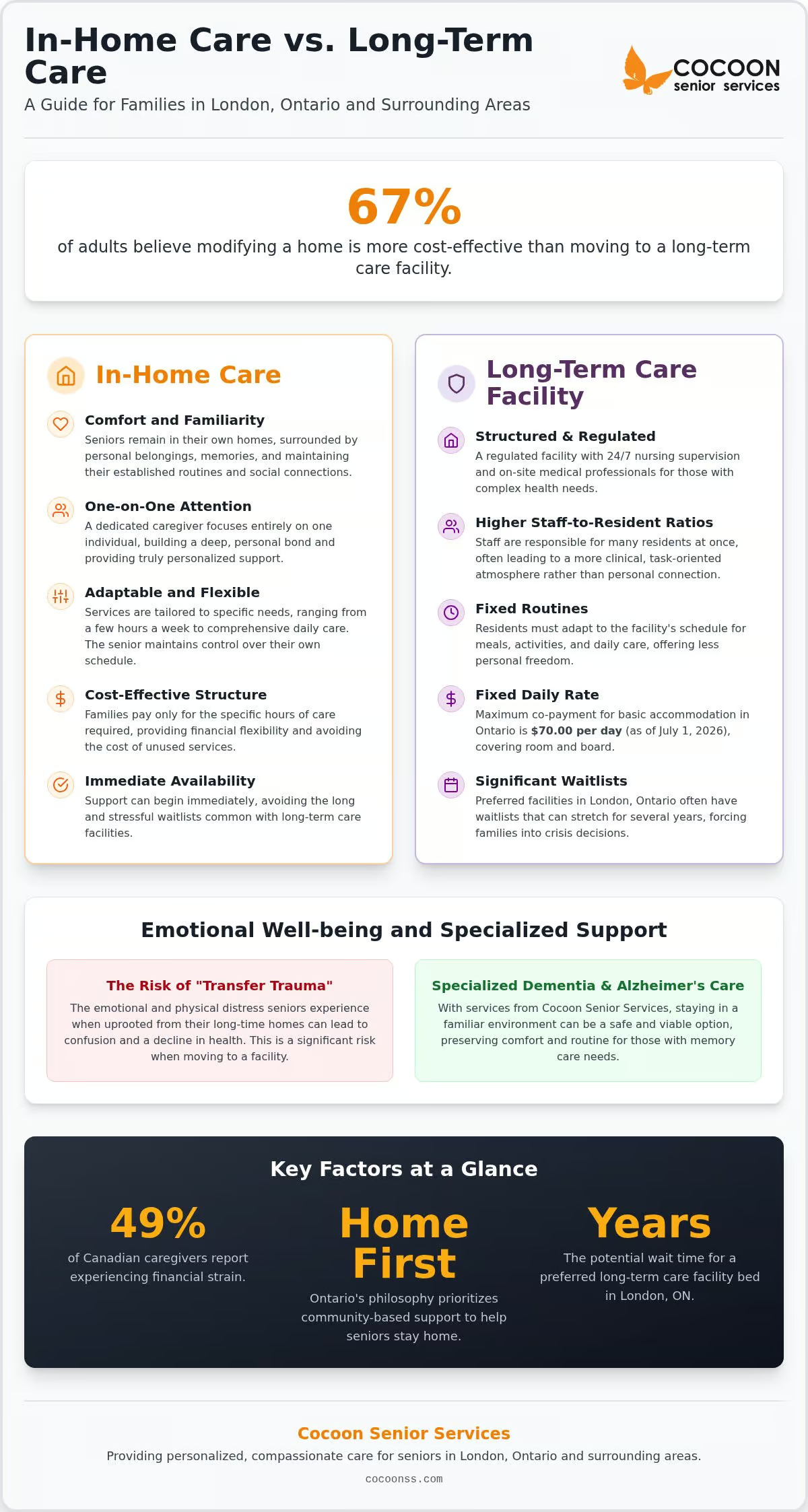
One of the most vital aspects In-home care vs. long-term care: what to consider is the caregiver-to-senior ratio. Home care offers a dedicated one-on-one relationship. At Cocoon Senior Services, our caregivers focus entirely on one individual at a time. In contrast, staff at LTC facilities are often responsible for many residents at once, which can lead to a more clinical, task-oriented atmosphere. The right choice usually depends on whether your family member requires constant medical intervention or if their needs are rooted in daily living support and companionship.
The Flexibility of Personalized In-Home Care
In-home support is remarkably adaptable. Services can range from a few hours of companionship each week to comprehensive daily personal care. Seniors keep their own schedules. They wake up when they choose and enjoy meals they actually like. Staying at home allows for immediate support from Cocoon Senior Services without the emotional and physical stress of a major move. It’s a way to organize care around the person, rather than forcing the person to fit into a facility’s routine.
What to Expect from Long-Term Care Facilities
If you’re researching What is Long-Term Care?, you’ll find it described as a structured environment designed for those with complex medical requirements. These facilities have on-site medical professionals available at all times. LTC is typically a permanent move. It becomes necessary when a senior’s health needs surpass what can be safely managed in a private residence, even with professional help. Understanding these boundaries helps families in London, Ontario realize when the transition to a facility is the safest path forward.
Essential Factors for Families in London and Surrounding Areas to Evaluate
Waitlists in London, Ontario are a significant hurdle for many families. It’s a hard truth that preferred long-term care facilities often have queues stretching several years. This delay frequently forces families into crisis decisions they aren’t ready to make. When looking at In-home care vs. long-term care: what to consider, the ability to start support immediately is a major advantage of home care. You aren’t waiting for a bed to become available. You’re bringing the help directly to the front door.
Safety shouldn’t require a move to an institution. Modern home care includes medication reminders and regular household safety checks to prevent falls. This approach encourages seniors to remain active participants in their own lives. If you’re feeling the pressure of these decisions, exploring our personalized care options can help clarify your next steps.
Comparing Financial Costs and Wait Times
Cost is a primary concern for most families. As of July 1, 2026, the maximum co-payment for basic accommodation in an Ontario long-term care home is $70.00 per day. While this covers room and board, it doesn’t offer the one-on-one companionship that keeps a senior’s spirit high. Home care provides the flexibility of paying only for the specific hours required. Many Ontario health agencies now follow a "Home First" philosophy, which prioritizes providing community-based support to help seniors return home safely after a hospital stay rather than moving directly into a facility. A 2026 report found that 49% of caregivers in Canada experience financial strain, making this flexibility even more vital.
Assessing Emotional Well-being and Social Connection
The emotional toll of a move is often overlooked. "Transfer trauma" describes the physical and emotional distress seniors experience when uprooted from their long-time residences. It can lead to increased confusion and a sharp decline in health. By staying in London and surrounding areas, seniors maintain their social ties and familiar surroundings. A consistent caregiver from Cocoon Senior Services builds a deep, personal bond. This one-on-one attention is a stark contrast to the high staff-to-resident ratios found in many facilities.
Transitioning Comfortably with Cocoon Senior Services
Making a choice about the future of a loved one’s care is a delicate process. Cocoon Senior Services provides a tailored approach that bridges the gap between total independence and facility care. When families evaluate ** In-home care vs. long-term care: what to consider**, they often find that staying home is the most peaceful path. Our caregivers serve London, Ontario and surrounding areas, ensuring local families have a reliable partner to lean on. We focus on preserving the dignity of the senior while providing the safety they need.
Specialized dementia and Alzheimer’s care is a cornerstone of our work. For seniors facing cognitive challenges, the familiarity of their own hallway or the view from their favorite chair provides immense comfort. Our certified professionals create a stable environment that reduces the anxiety often triggered by institutional settings. By choosing home care, you provide your loved one with the security of 24-hour supervision without the distress of a permanent move.
We handle the daily "heavy lifting" so you don’t have to. Our household support includes meal preparation and housekeeping, which allows families to step back from exhausting caregiving duties. A recent report indicated that 77% of caregivers experience significant fatigue and stress. When Cocoon Senior Services manages the chores, you can focus on simply being a family again. It’s about reclaiming quality time together in a space that feels like home.
Customizing a Care Plan that Fits Your Lifestyle
Every senior has a unique story and specific needs. Our process begins with a detailed consultation to understand the rhythm of your loved one’s life. We then integrate medication reminders and personal care into a seamless daily routine that feels natural rather than clinical. To see how we prioritize connection and safety, you can view our approach to care on YouTube. This personalized attention ensures that every senior in London, Ontario receives the high-quality support they deserve while remaining in the place they love most.
Choosing the Best Path for Your Loved One’s Future
Deciding between staying at home and moving to a facility is a deeply personal journey. You’ve seen that home care offers the unique benefit of immediate, one-on-one attention that facilities often struggle to match. It’s about more than just safety; it’s about preserving the dignity and comfort of a life well-lived in familiar surroundings. When evaluating** In-home care vs. long-term care: what to consider**, remember that staying home bypasses the long waitlists found in London, Ontario while providing a stable environment for those with cognitive challenges.
Cocoon Senior Services brings specialized dementia and Alzheimer’s care training directly to your door. Our local expertise in London and surrounding areas ensures your family has a partner who truly understands the community. We provide comprehensive household and personal support, from meal preparation to medication reminders, so you can focus on being a supportive daughter, son, or spouse. You don’t have to navigate this complex system alone. Contact Cocoon Senior Services for a personalized care consultation in London and surrounding areas to discover how we can help your loved one age with grace. There is peace in knowing you’ve made the right choice for your family’s future.
Frequently Asked Questions
What is the average cost of in-home care in London, Ontario?
Private in-home care rates in the London area typically range from $28 to $46 per hour for non-medical support. This rate covers various services including meal preparation, housekeeping, and personal care. Because families can choose the specific hours they need, this option offers more financial control than a fixed facility rate. It’s an effective way to provide high-quality support without the immediate commitment of a permanent facility move.
How long are the waitlists for long-term care homes in London?
Waitlists for preferred long-term care facilities in London, Ontario often stretch for several years. This is a critical point when looking at ** In-home care vs. long-term care: what to consider** for a family in crisis. Since placements are determined by medical necessity and urgency, there’s no guarantee of a bed in a chosen home. Home care serves as a vital bridge, providing immediate safety while you wait for a placement.
Can dementia patients safely stay at home with professional care?
Seniors with dementia or Alzheimer’s can remain at home safely when supported by caregivers with specialized training. Professional home care provides the constant one-on-one monitoring that is often difficult to achieve in a busy facility environment. Staying in a familiar house helps reduce the anxiety and symptoms frequently seen in those with cognitive decline. It allows for a personalized routine that respects the senior’s long-term habits and preferences.
Does the Ontario government provide funding for private home care?
The Ontario government provides some funded support through Ontario Health atHome, but it’s rarely enough to cover all daily needs. Most families in London and surrounding areas use private home care to fill the gaps left by provincial programs. Private services allow for longer visits and more comprehensive support, such as meal prep and companionship. This combination ensures your loved one receives consistent, high-quality care that government funding alone may not provide.
Disclaimer
We aim to provide helpful guidance for seniors and families, but this content should not replace professional medical advice. Some links may be affiliate links, and we are not responsible for third-party content.