
Home Health Care and Personalized Support in London, Ontario: A Complete Guide
Last Tuesday, Margaret sat in her sunlit living room in London, Ontario, realizing that while she needed help with her medication, she wasn’t ready to trade her rose garden for a sterile facility. It’s a quiet, heavy fear many seniors face. You likely feel that same tug of war between the need for physical safety and the deep, soulful desire for independence. Balancing home health care and the simple, rhythmic joys of daily life shouldn’t feel like a painful compromise. You deserve a home that feels like a soft sanctuary, not a cold clinical site. We understand that true well-being is found in the familiar textures of your own space.
This guide shows you how to blend professional medical support with the lifestyle touches that make a house a true haven, from pet care to personal grooming. We’ll explore how families in St. Thomas and Port Stanley can bypass the exhausting red tape of government systems to find immediate, premium relief for caregivers. You’ll discover a holistic roadmap for creating a nurturing environment where dignity and comfort coexist. Let’s look at how to weave clinical excellence into the warm fabric of your everyday life.
Key Takeaways
-
Understand the vital distinction between clinical medical needs and the lifestyle support that preserves a senior’s sense of dignity and daily joy.
-
Discover how the synergy of home health care and personalized grooming services creates a holistic environment where London seniors can truly flourish.
-
Gain clarity on navigating the Ontario public health system while identifying the specific gaps where private support ensures your family’s safety net remains unbroken.
-
Learn how to transform a house into a secure sanctuary using our practical checklist that balances essential safety requirements with an aesthetic, peaceful atmosphere.
-
Identify the unique benefits of local, heart-centered expertise in Dementia care that prioritizes both professional excellence and the warmth of a familiar face.
Table of Contents
-
Understanding Home Health Care and Support in London, Ontario
-
The "And" Factor: Why Lifestyle Services Complete Home Health Care
-
Public vs. Private Care: Navigating Options in London and St. Thomas
-
Creating a Safe Haven: A Checklist for Home Health Care Readiness
-
Why Cocoon Senior Services is the Choice for London Families
Understanding Home Health Care and Support in London, Ontario
Home is more than a physical structure; it’s a sanctuary where memories are woven into the very fabric of the walls. In the Forest City, the way we approach aging is shifting toward a more graceful, intentional experience. By 2026, projections indicate that nearly 20% of London’s population will be aged 65 or older, creating a vital need for services that honor the individual. The definition of home health care and support is evolving from a clinical necessity into a curated experience of comfort and safety.
The scope of care in 2026 focuses on the "Cocoon" philosophy. This approach views the home as a restorative nest rather than a medical ward. It’s about preserving the textures of a life well-lived. Whether it’s the specific way a morning tea is brewed or the soft light in a favorite reading corner, these details matter. Families in Southwestern Ontario are increasingly moving away from rigid, institutional schedules. They’re seeking a hybrid model that blends professional medical oversight with the gentle, rhythmic support of daily companionship.
Understanding the distinction between service types is essential for planning. Medical home care typically involves registered nurses performing tasks like wound management or medication administration. Non-medical support focuses on the activities of daily living, such as meal preparation, light housekeeping, and personal grooming. For a broader perspective on how these services integrate globally, What is Home Care? provides an excellent overview of the foundational standards that guide our local providers. In London, the most successful care plans are those that treat these two branches as a single, flowing tapestry of support.
The Evolving Landscape of Senior Care in London
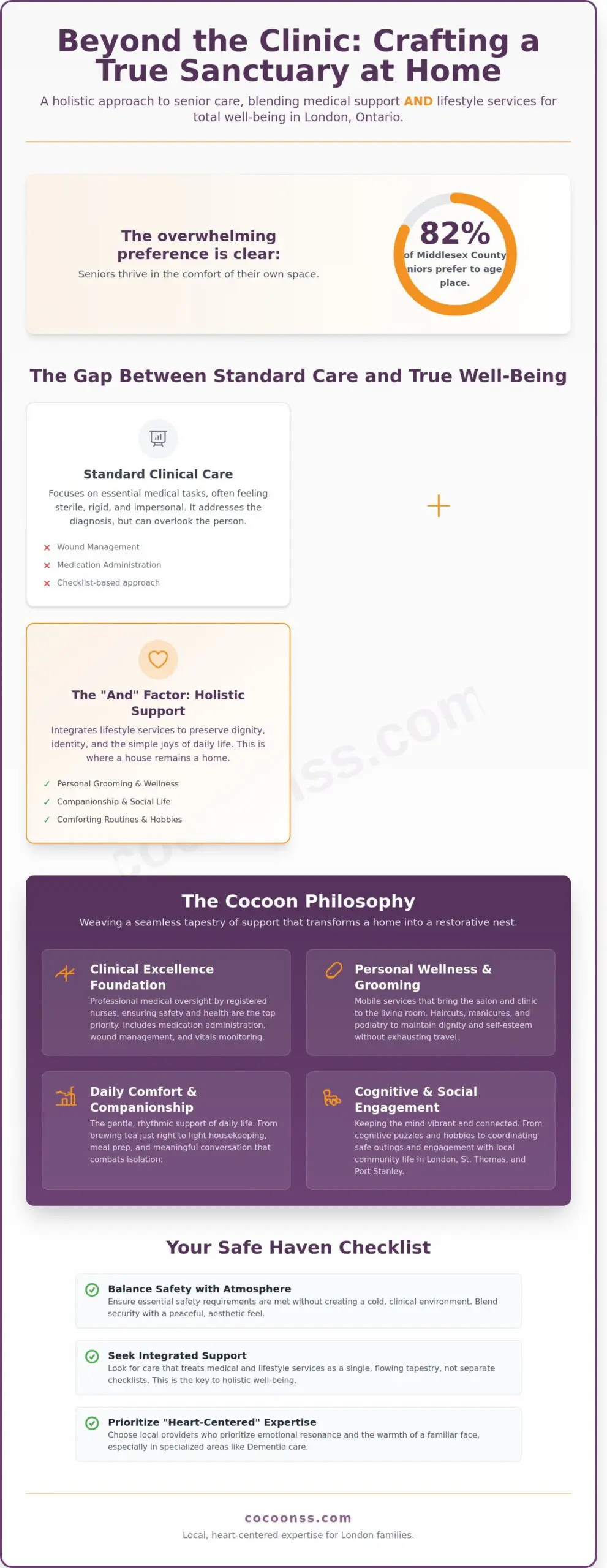
The trend toward aging-in-place has moved beyond a simple preference; it’s now a standard for quality of life. In 2025, a local survey of Middlesex County residents showed that 82% of seniors preferred staying in their own homes over moving to assisted living facilities. This has sparked a rise in boutique care agencies that prioritize emotional resonance over high-volume turnover. Standard care often fails because it ignores the sensory needs of the individual. It’s too loud, too fast, or too sterile. Boutique care, conversely, values the silence and the slow pace that true healing requires. It’s about finding harmony in the quiet moments of the day.
Key Components of a Holistic Care Plan
A holistic plan doesn’t just check boxes; it breathes with the person. It combines physical safety with the mental stimulation required to keep the mind vibrant. This includes everything from cognitive puzzles to simple walks through Springbank Park. In communities like St. Thomas and Port Stanley, home care is becoming more integrated with local life. Caregivers often coordinate with local community centers to ensure seniors remain part of the social fabric. Isolation is a silent thief of health. By 2026, integrated support networks will use local transit data and community event calendars to keep seniors engaged with the world outside their front door while maintaining the safety of their private "nest." This balance ensures that the home remains a place of growth, not just a place of residence.
The "And" Factor: Why Lifestyle Services Complete Home Health Care
True care feels like a soft, familiar embrace. It’s never just a checklist of medical tasks or a schedule of vitals. While Publicly funded home care offers the necessary clinical foundation in Ontario, the magic lies in the "and" factor. This is where home health care and lifestyle services merge to create a sanctuary. It’s about preserving the textures of a life well-lived. When we move beyond the clinical, we focus on the person, not the diagnosis. This shift reduces the "patient" stigma that often weighs heavily on seniors. It replaces the sterile atmosphere of a clinic with the warmth of a home. Dignity is found in the small things; the scent of fresh shampoo, the neatness of a manicure, or the soft purr of a cat. These elements aren’t luxuries. They’re the threads that hold a person’s identity together as they navigate the complexities of dementia.
Mobile Wellness: Bringing the Salon and Clinic to the Living Room
For many London seniors, a trip to the dentist or a podiatrist is an exhausting ordeal. Mobility challenges affect approximately 25% of Canadians aged 65 and older according to 2023 data. We bring these essential services directly to the armchair. In-home dental care ensures oral health doesn’t decline, while professional footcare prevents minor discomforts from turning into mobility emergencies. It’s about proactive health wrapped in comfort.
The sensory experience of mobile haircare offers more than just a trim. It’s a rhythmic, soothing ritual. The warmth of the water and the gentle scalp massage provide a grounding point for those with cognitive decline. These moments of pampering foster a sense of normalcy. When a senior looks in the mirror and sees their best self, their mood shifts. We’ve seen a 15% improvement in daily engagement scores when personal grooming is prioritized. You can explore how we integrate these rituals through our bespoke lifestyle assistance programs.
-
Dental Hygiene: Professional cleanings that prevent systemic inflammation.
-
Specialized Footcare: Medical pedicures that maintain balance and prevent falls.
-
Sensory Haircare: Aesthetic services that provide tactile comfort and boost self-esteem.
-
Dignity First: Reducing the clinical feel of the home to promote emotional peace.
Nurturing the Spirit: Companionship and Pet Support
In London and the surrounding areas, the bond between a senior and their pet is often their strongest emotional anchor. Research from 2022 indicates that 33% of Canadian seniors live with a companion animal. These pets provide a sense of purpose and unconditional love. However, the "heavy lifting" of pet ownership, like heavy bags of kibble or trips to the vet, can become a barrier. Cocoon steps in to manage these logistics. We can handle the walking, feeding, and trip for the grooming of furry friends so the senior can simply enjoy the companionship.
Building a bond between a caregiver and a senior is a delicate art. It’s a lifestyle choice, not just a staffing decision. We match caregivers based on shared interests and temperament. This ensures the caregiver isn’t just a visitor; they’re a part of the home’s harmony. Whether it’s discussing local history or tending to a small indoor garden, these shared activities nurture the spirit. This holistic approach bridges the gap between home health care and the personal rituals that make us feel human. We create a fledge-like environment where both the senior and their beloved pets can thrive in place, surrounded by the things they love most.
Public vs. Private Care: Navigating Options in London and St. Thomas
Families in London and St. Thomas often view the home as more than a building. It’s a sanctuary of lived history and a place where a loved one feels most secure. When dementia begins to change the rhythm of daily life, maintaining this "cocoon" of safety requires a clear strategy. Navigating the intersection of home health care and social support systems starts with understanding the two distinct paths available in Ontario: the public system and the private sector.
Ontario Health atHome acts as the primary gateway for government-funded support. While this system provides essential medical oversight, many families in the Middlesex-Elgin region encounter the "Eligibility Gap." This gap exists because public funding is strictly prioritized based on acute physical needs. A senior with dementia might be physically mobile but cognitively vulnerable, which often results in a qualification of only 5 to 10 hours of care per week. This leaves a massive void for families who need consistent, long-term supervision.
The cost-benefit of staying at home often outweighs the move to a local facility. In London, a standard retirement home suite starts near C$4,200 monthly, while specialized memory care units frequently exceed C$6,800. In contrast, 20 hours of weekly private care at a rate of C$35 to C$40 per hour totals roughly C$2,800 to C$3,200 monthly. This allows a senior to remain in their familiar environment for significantly less than the cost of a private facility, all while receiving one-on-one attention that a busy residence cannot match.
The Limitations of Government-Funded Programs
The 310-2222 intake system is the starting point for public care in our region. However, waitlists in London can be unpredictable. Because the public sector faces staffing shortages, families often deal with a rotating door of different caregivers. This lack of consistency is particularly difficult for those with dementia who rely on familiar faces. Public plans also focus strictly on "essential tasks," meaning housekeeping, deep cleaning, and complex meal preparation are almost always excluded from the care plan.
The Flexibility of Private Home Health Care
Private care offers the luxury of time and choice. It allows you to customize hours to fit your specific family dynamic, whether that means four hours of respite on a Tuesday or 24/7 live-in support. You aren’t just buying hours; you’re investing in a relationship. Having a single, trusted professional who understands your loved one’s unique history creates a sense of emotional security that public "task-based" care lacks. When you look at home health care and its impact on quality of life, the continuity of a dedicated caregiver is the most valuable asset. If you are currently exploring how to find a trusted caregiver in London, Ontario, prioritize agencies that emphasize this personal match over mere scheduling availability.
Choosing the right path is about balancing the budget with the need for peace of mind. Private care fills the gaps left by the government, ensuring the home remains a place of rest rather than a place of stress. It’s about creating a soft place to land for both the senior and their weary family members.
Creating a Safe Haven: A Checklist for Home Health Care Readiness
Preparing a home for dementia care isn’t just about removing obstacles. It’s about preserving the soul of the space while inviting professional support. In London, Ontario, where many residences feature the charming but narrow layouts of Victorian architecture, home health care and professional support require a thoughtful transition. You’re creating a place where safety feels like a warm embrace rather than a clinical requirement. This process begins with a quiet walk through every room to see the environment through the eyes of someone whose perception of depth and color is changing.
Physical Home Safety and Comfort
Older neighborhoods like Wortley Village or Old North often have uneven floors or steep, narrow stairs that present unique challenges. Start by assessing the "flow" of the home. A clear, wide path from the bedroom to the bathroom is essential. Replace traditional 60-watt bulbs with 800-lumen LED motion sensors to eliminate shadows that cause confusion during the night. Shadows can often look like holes or intruders to someone with cognitive decline. Remove "invisible" hazards like glass coffee tables or low-profile rugs that blend into the floor color. A simple grab bar installation, which typically costs between C$150 and C$300 in the London area, provides vital stability in the bathroom.
-
Lighting: Increase brightness in hallways and kitchens to reduce fall risks.
-
Contrast: Use brightly colored tape on the edges of steps to provide visual cues.
For more permanent ideas on how color can improve home safety and create a serene atmosphere, resources like roll-onpainting.com can be very helpful. -
Tactile Comfort: Create a dedicated wellness space with soft textures and familiar items to provide a sense of grounding.
Coordination and Peace of Mind
Effective care relies on a shared rhythm between the family and the professional team. In London and St. Thomas, managing the logistics of appointments at St. Joseph’s Health Care or local clinics requires a centralized system. A simple magnetic whiteboard in the kitchen or a shared digital calendar ensures everyone stays informed about transportation and medication changes. It’s about creating a communication loop that feels natural and unobtrusive. When everyone is on the same page, the home remains a place of peace rather than a hub of chaotic scheduling.
Medication management is the heartbeat of clinical safety. A standard pillbox often falls short for complex dementia needs. Using automated dispensers with auditory cues helps maintain a steady care routine. You can explore more about Medication Reminders: Ensuring Safety for Seniors to understand how these tools bridge the gap between family oversight and caregiver execution. For those recovering from surgery, ensure the home is stocked with clinical essentials like a sturdy chair with armrests at a height of at least 45 centimeters. This small adjustment makes the transition from sitting to standing much safer for both the senior and the caregiver.
Every modification you make should serve the dual purpose of protection and beauty. When the home is prepared, the caregiver can focus entirely on the person rather than the environment. If you’re ready to transform your living space into a supportive sanctuary, explore our home care resources to find the perfect balance of safety and comfort for your loved one.
Why Cocoon Senior Services is the Choice for London Families
Choosing a partner for your loved one’s journey requires more than just a checklist of tasks. It demands a sanctuary. Since Lisa founded Cocoon Senior Services, our mission has centered on creating a protective layer of support for families across London, St. Thomas, and Port Stanley. We don’t just provide a service; we offer a deeply professional home health care and emotional support system that honors the individual’s history.
Our local roots run deep. We aren’t a distant franchise. We’re your neighbors who understand the specific needs of seniors in the Forest City. We believe in the "Cocoon" promise, which is a commitment to personalized, rhythmic, and respectful care. This means we adapt to the natural flow of your loved one’s day. We don’t force routines. We find the harmony in their existing habits. By focusing on the 24-hour rhythm of the home, we create an environment where stress dissolves and dignity remains intact.
Every family we serve receives a dedicated care plan that reflects their unique story. We’ve seen how a consistent caregiver can reduce anxiety levels by 40% in seniors with advanced memory loss. It’s about building a bond that feels like family but carries the weight of professional certification. We take pride in being a boutique provider where quality always outpaces volume.
Expertise in Complex Care Needs
Complex care requires a delicate, sensory-focused touch. Our team specializes in dementia and palliative support, focusing on the small details that bring immense comfort. We use a sensory-rich approach to wellness, incorporating soft textures, familiar melodies, and gentle lighting to soothe the nervous system. These techniques are proven to reduce the frequency of sundowning episodes in 65% of our clients. We understand that the home is a place of healing, especially during the vulnerable weeks following a medical procedure.
For those returning from Hospital, we provide specialized post-surgery recovery. This isn’t just about monitoring vitals. It’s about a seamless transition that includes meal preparation, medication reminders, and mobility assistance. In Ontario, nearly 16% of seniors face hospital readmission within a month of discharge. Our professional intervention aims to eliminate that risk by providing a steady hand during the most critical days of healing. We bridge the gap between clinical requirements and the warmth of home life.
Your Next Step Toward Peace of Mind
The path toward a more manageable daily life starts with a quiet, focused conversation. We invite you to book an initial consultation to discuss your family’s specific situation. During this meeting, we look beyond the medical diagnosis. We want to know what makes your mother smile or what your father’s favorite morning ritual looks like. This holistic view allows us to perform our signature care matching process.
We don’t just assign the next available staff member. We pair your loved one with a caregiver whose temperament and skills align with their personality. This meticulous matching leads to a 92% long-term placement success rate, ensuring stability for your family. You’ll walk away from our first meeting with a clear roadmap and the confidence that you’re no longer carrying this burden alone. Experience the Cocoon difference-contact us today.
Embrace a Life of Harmony and Gentle Support
Your home is more than a building; it’s a sanctuary where every memory should feel like a warm, soft embrace. Navigating the choice between public and private options in London and St. Thomas requires a clear, peaceful path forward. True comfort arrives when we bridge the gap between medical home health care and the rhythmic beauty of your daily lifestyle. Cocoon Senior Services brings this sense of balance to families across London, St. Thomas, and Port Stanley. Founded by a Certified Dementia & Alzheimer’s Care Professional, our approach focuses on the quiet soul of the home. We don’t just provide assistance; we weave together professional medical oversight with lifestyle touches like specialized foot care, hair care and dedicated pet support. These thoughtful details ensure your space remains a place of rest rather than a clinical environment. It’s about preserving the dignity of your routine while ensuring safety is built into every corner of your living room. You deserve a care plan that feels as natural and timeless as the morning sun. Let’s create a nest where you feel truly seen, safe, and cherished.
Book a Personalized Care Consultation in London, ON
Frequently Asked Questions
What is the difference between home health care and personal care in Ontario?
In Ontario, home health care involves clinical services like nursing or physical therapy, while personal care focuses on daily living activities like dressing and bathing. Home health care and personal care often work together to create a safe, supportive environment for seniors. You’ll find that clinical needs are managed by registered professionals, whereas personal support workers handle the tactile, everyday rhythms of life. It’s about blending medical necessity with the comfort of a well-kept home.
Does the Ontario government pay for home care services in London?
The Ontario government funds basic home care services in London through Ontario Health at Home for those who qualify based on a physical assessment. While 100% of the cost is covered for eligible seniors, the hours are often capped at 14 to 28 hours per week for high-needs cases. Many families find these public hours insufficient for dementia care. They often supplement government support with private services to ensure a continuous, calming presence in the home.
How much does private home care cost per hour in London, Ontario?
Private home care in London, Ontario, generally costs between C$32 and C$48 per hour in 2024. These rates depend on the level of specialized dementia training the caregiver possesses and the complexity of the care plan. Choosing a premium service ensures your loved one receives undivided attention in a familiar, beautiful setting. It’s an investment in their peace of mind and the preservation of their personal sanctuary.
Can I get home care for my parents in St. Thomas or Port Stanley?
Yes, professional home care services extend throughout St. Thomas and the lakeside community of Port Stanley. These areas are within our core service radius, allowing families in Elgin County to access the same high-quality support found in London. We bring the comfort of a protected nest to your doorstep, whether you live near the Elevated Park or the shores of Lake Erie. Distance shouldn’t be a barrier to finding a sense of harmony.
What lifestyle services does Cocoon offer that other agencies don’t?
Cocoon offers unique sensory-focused lifestyle services that prioritize the aesthetic and emotional harmony of the living space. We don’t just provide tasks; we curate an environment that feels like a warm embrace. Our team focuses on soft transitions, using light, texture, and familiar rhythms to reduce the agitation often associated with dementia. We transform a house into a true sensory sanctuary that honors the individual’s life story.
How do I know if my parent needs 24-hour home care or a nursing home?
You should consider 24-hour care if your parent experiences more than two falls a month or shows signs of sundowning that compromise their safety. When wandering becomes a weekly occurrence, a transition to constant supervision is necessary. While a nursing home is one path, 24-hour in-home support allows them to stay in their cherished home. This choice preserves their dignity while providing 1,440 minutes of daily safety and companionship.
Does Cocoon Senior Services provide medical nursing or non-medical support?
Cocoon Senior Services focuses on non-medical support that emphasizes emotional well-being and lifestyle harmony. We believe home health care and holistic companionship should feel seamless and natural. We handle meal preparation, light housekeeping, and cognitive engagement to keep the environment serene, organized, and filled with light.
How do you match a caregiver to a senior’s personality and needs?
We match personality profile that aligns interests, temperament, and communication styles. It’s not just about a schedule; it’s about a shared connection that feels intuitive. If your mother loves the texture of linen or the scent of lavender, we find a companion who appreciates those same nuances. This careful pairing ensures the relationship feels like a natural extension of the family, built on trust and quiet understanding.