
Hard Conversations: How to Talk to Aging Parents in London, Ontario About Home Care
Last Tuesday, a daughter in Old North sat across from her father and noticed the stack of unopened mail and the faint, dusty smell of a kitchen that hadn’t seen a home-cooked meal in weeks. She felt that familiar knot of guilt and hesitation tighten. You likely feel this same tension, knowing that having hard conversations with aging parents about having home care and when it’s time to allow help is a delicate bridge to cross. It’s natural to worry about the silent treatment or causing hurt feelings when you only want to ensure their safety.
At Cocoon Senior Services, we believe that bringing support into the home should feel like a warm embrace rather than an intrusion. You’ll learn how to identify the three specific physical cues that signal it’s time for a change and how to present options that prioritize your parent’s autonomy. We provide a practical roadmap for families in London and surrounding areas to reach a peaceful agreement that preserves dignity. This guide explores how the team at Cocoon Senior Services help your family transition from constant worry to a shared sense of security.
Key Takeaways
-
Identify subtle environmental cues in London and surrounding areas that signal it is time to transition from independent aging to receiving gentle support.
-
Master empathetic frameworks for having hard conversations with aging parents about having home care and when it’s time to allow help without causing defensiveness.
-
Discover the "Soft Entry" strategy to bridge the gap to care by starting with non-threatening lifestyle assistance like meal preparation and housekeeping.
-
Learn how to navigate the emotional "Role Reversal" and replace outdated fears of nursing homes with the sophisticated reality of modern home care.
-
Find out how Cocoon Senior Services team partner with families to create customized care plans that honor a senior’s established home routine.
Table of Contents
-
Recognizing the Signs: When is it Time for Help in London and Surrounding Areas?
-
The ‘Soft Entry’ Strategy: Lifestyle Support as a Bridge to Care
-
Next Steps: Partnering with Cocoon Senior Services in London
Recognizing the Signs: When is it Time for Help in London and Surrounding Areas?
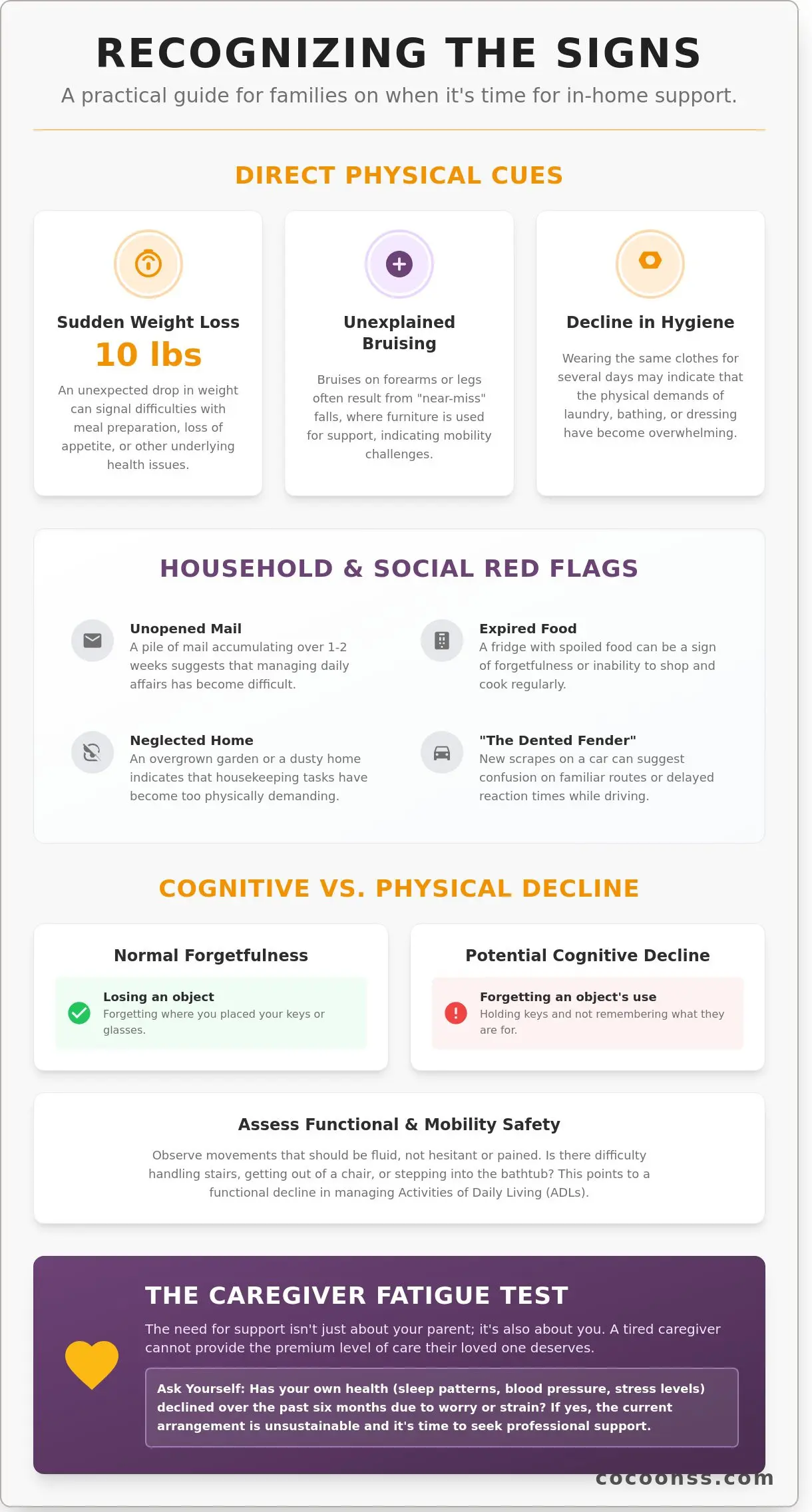
Watching a parent age is a journey of subtle transitions. The shift from independent living to needing support rarely happens overnight. It’s often a quiet accumulation of small details that signal a change in the home’s harmony. In London and surrounding areas, these signs appear in the spaces where life used to flow effortlessly. You might notice the garden in a Wortley Village property, once meticulously tended, now looks overgrown and neglected. Unopened mail from the last 14 days piling up on the entryway table or a fridge filled with expired milk and wilted greens are clear indicators that daily tasks have become a burden.
Physical changes offer the most direct evidence. A sudden 10-pound weight loss since the last family dinner or visible bruising on the forearms suggests "near-miss" falls. These bruises often occur when a senior uses furniture or walls to steady themselves, a sign that their mobility is compromised. Poor hygiene, such as wearing the same clothes for three consecutive days, points to a struggle with the physical demands of laundry or bathing. Having Hard conversations with aging parents about having home care and when it’s time to allow help begins with acknowledging these realities without judgment.
The "Caregiver Fatigue" test is equally vital. If your own health has declined over the past six months due to constant worry or physical strain, the current arrangement is no longer sustainable. Cocoon Senior Services recognizes that a tired caregiver cannot provide the premium level of care their loved one deserves. When your own sleep patterns or blood pressure readings begin to suffer, it’s a signal that the family dynamic needs professional support to restore balance.
Household and Social Red Flags
Keep a close eye on the "dented fender." Fresh scrapes on a vehicle often indicate confusion regarding familiar London driving routes, especially near busy hubs like Masonville. Social withdrawal is another quiet alarm. If a parent suddenly stops attending their weekly bridge club or church functions, it’s rarely just about lack of interest. Often, the effort required to prepare and travel has become overwhelming. Housekeeping that once took an afternoon now feels like an impossible mountain, leaving the home feeling heavy instead of peaceful.
Cognitive vs. Physical Decline
It’s essential to distinguish between a misplaced set of keys and the early signs of dementia. Normal forgetfulness is losing an object; cognitive decline is forgetting what that object is used for. Assess mobility safety by observing how they handle the stairs or step into the bathtub. These movements should be fluid, not hesitant or pained. Functional decline is the inability to safely manage Activities of Daily Living (ADLs). Identifying these gaps early makes Having Hard conversations with aging parents about having home care and when it’s time to allow help a proactive step toward safety rather than a reactive crisis. Cocoon Senior Services focuses on maintaining the dignity of the individual while ensuring their environment remains a place of security and quality.
Why the ‘Care Conversation’ is Hard for Ontario Families
Talking about the future feels heavy. In London and surrounding areas, many families wait until a crisis occurs before having hard conversations with aging parents about having home care and when it’s time to allow help. This delay often stems from a deep-seated role reversal trauma. For decades, your parents were the protectors and the providers. Now, the dynamic shifts. This transition isn’t just logistical; it’s an emotional upheaval that can feel like a betrayal of the natural order for both the adult child and the parent.
Many seniors in Ontario still associate the word care with the institutional nursing homes of the 1970s and 80s. They fear losing their identity and their history. Modern home care through Cocoon Senior Services is the opposite of this. It’s about maintaining a lifestyle in a familiar environment. When a parent hears help, they often translate it to helplessness. They see a stranger in their house as an invasion of privacy rather than a support system. In the London community, where long-term residency in a family home is a badge of honor, the idea of bringing in outside assistance can feel like a public admission of failure.
The Psychology of Resistance
Parents often hide physical struggles or cognitive slips to protect their children from worry. They value the privacy of their long-term family home above all else. Accepting assistance means acknowledging they can’t do what they once did. This is a form of grief. It’s not just stubbornness; it’s a mourning process for their lost independence. A 2022 survey of Ontario seniors found that 65 percent of respondents would rather hide a fall than risk losing their autonomy. Their resistance is a shield against the fear of the unknown.
Managing Your Own Emotional State
You might feel a crushing sense of guilt for not being the one to provide every hour of care yourself. It’s vital to separate your role as a child from the role of a care coordinator. Professional support from Cocoon Senior Services allows you to return to being a family member again. Prepare for a "No" during your first talk. It’s a defense mechanism, not a final answer. If you’re feeling overwhelmed by the weight of these decisions, connecting with others on the Cocoon Senior Services Facebook page can offer a sense of community and shared experience during this transition.
Strategic Frameworks for Having the Hard Conversation
Approaching the topic of support requires a shift in perspective. It’s not about taking away independence; it’s about preserving the lifestyle your parents love in London and surrounding areas. Having Hard conversations with aging parents about having home care and when it’s time to allow help works best when you use a "Start Small" strategy. Instead of suggesting a full-time caregiver, focus on one specific, non-threatening task. This might be assistance with weekly laundry or help with meal preparation. By narrowing the focus, the change feels like a minor adjustment rather than a life-altering shift.
Communication experts at Cocoon Senior Services recommend using "I" statements to reduce defensiveness. Instead of saying "You aren’t eating enough," try "I feel worried when I see the fridge is empty, and I want to make sure you have the energy you need." This places the emphasis on your feelings of love and concern rather than their perceived failures.
If resistance remains high, propose a "Trial Period." Pitch the help as a temporary 30-day experiment. This lowers the stakes. It’s much easier for a senior to agree to a day a week of assistance than to a permanent change. During this time, the team at Cocoon Senior Services can demonstrate how professional support actually creates more freedom, not less. If the tension is too high between family members, invite a third-party expert. A family doctor in London or a professional consultant like Lisa can facilitate the discussion, providing a neutral, clinical perspective that removes the emotional baggage from the room.
Effective Conversation Starters
The way you open the dialogue sets the tone for the entire process. Start by asking for their advice. You might say, "You’ve always managed this home so well. How can we make things easier for you to stay here comfortably?" This keeps them in the driver’s seat. It’s also helpful to frame the talk as "Future Planning" rather than a reaction to a crisis. Discussing wishes before an emergency occurs allows for calm, rational decision-making. You can also reference a positive local example. Mentioning a friend who had a great experience with senior home care services can normalize the idea and reduce the stigma often associated with asking for help.
What to Do When They Refuse
Rejection is common, but it shouldn’t end the conversation. Validation is your most powerful tool. Acknowledge their feelings immediately. "I hear that you value your privacy, and I respect that." Validation doesn’t mean backing down on safety, but it does lower their guards. If a caregiver is a hard "no," suggest a "Safety First" compromise. Start by installing grab bars in the bathroom or improving lighting in hallways. These physical changes are often easier to accept and pave the way for human support later. Most importantly, leave the door open. Having Hard conversations with aging parents about having home care and when it’s time to allow help is rarely a one-time event. It’s a series of gentle, evolving connections that prioritize their dignity and safety above all else.
The ‘Soft Entry’ Strategy: Lifestyle Support as a Bridge to Care
Starting a dialogue about assistance often fails because the focus shifts immediately to personal care. Suggesting help with bathing or dressing feels like an intrusion. It signals a loss of independence that many seniors aren’t ready to accept. This friction point is the most common hurdle when having hard conversations with aging parents about having home care and when it’s time to allow help. To bypass this resistance, Cocoon Senior Services recommends a "soft entry" through lifestyle support.
Instead of "care," reframe the service as hiring a "Professional Assistant." This shift in language changes the power dynamic. Your parent remains the manager of their home, simply delegating the heavy lifting to a qualified professional. It’s a premium service designed to maintain a beautiful, well-run environment in London and surrounding areas. Framing help as a luxury rather than a necessity allows your parent to accept support while keeping their dignity intact. It’s about enhancing their quality of life, not managing their decline.
Practical Non-Medical Entry Points
Focusing on the home and hobbies creates a natural opening for support. Many seniors in London take great pride in their pets and gardens. Bringing in someone for dog walking in local spots like Springbank Park or Victoria Park is a practical way to introduce a new face into the home. It’s a service for the pet, not the parent. Other gentle entry points include:
-
Mobile Wellness: Arrange for footcare or haircare at home, presented as a "spa day" experience rather than a medical requirement.
-
Meal Preparation: Focus on the enjoyment of gourmet, fresh food. A Cocoon Senior Services professional can handle the prep and cleanup, ensuring high-quality nutrition without the physical strain of standing in the kitchen.
-
Housekeeping: Hiring someone to manage the "heavy" chores like laundry or deep cleaning keeps the home in pristine condition, which reduces the risk of falls and keeps the environment peaceful.
Companionship as a Social Outlet
Social isolation is a significant concern for seniors living alone. Sometimes, the best way to introduce help is to frame it as a social connection. A companion can facilitate outings to the Covent Garden Market or a local café, providing safe transportation and engaging conversation. This removes the "caregiver" label and replaces it with "social partner."
Technology is another excellent bridge. Many seniors want to stay connected with family but feel frustrated by tablets or smartphones. A Cocoon Senior Services team member can act as a tech-support specialist. This role is highly valued and non-threatening. You can see real examples of how these social bonds improve daily life by visiting Cocoon’s YouTube. These small, non-medical steps build the trust necessary for more intensive support later on.
Discover how a tailored lifestyle plan can bring peace of mind to your family by exploring the services at Cocoon Senior Services.
Next Steps: Partnering with Cocoon Senior Services in London
Moving from a difficult discussion to a concrete plan brings a sense of relief to everyone involved. Having Hard conversations with aging parents about having home care and when it’s time to allow help is the first step toward a safer, more balanced life.The Cocoon team begin this journey with a gentle family introduction. This isn’t a clinical intake process; it’s a conversation. We focus on building trust first, ensuring your parents feel heard rather than managed. By focusing on the person rather than the diagnosis, we transform a scary transition into a supportive partnership.
Every senior has a rhythm to their day that deserves respect. Cocoon Senior Services creates care plans that integrate with established routines instead of disrupting them. If your father enjoys his coffee on the porch at 8:00 AM, that remains the priority. We provide the support necessary to keep those small joys safe. In London and surrounding areas, our team brings local expertise to families navigating the "Club Sandwich" generation. Statistics from 2022 show that over 2 million Canadians are now balancing the care of aging parents while supporting their own children and grandchildren. We act as the bridge that allows you to be a daughter or son again, rather than a full-time coordinator.
What Sets Cocoon Apart
Cocoon Senior Services looks at the whole person. We prioritize holistic well-being, which means we care as much about emotional engagement as we do about physical safety. Our team provides professional advocacy for seniors in London and surrounding areas, ensuring their voices are central to every decision. We stay connected with the local community to bring the best resources to our clients. You can follow Cocoon on Facebook for regular community tips and updates on local senior wellness.
Booking a Consultation
Family tension often stems from a lack of objective information. A professional assessment from Cocoon Senior Services reduces this conflict by providing a clear, expert perspective on what help is actually needed. Our "Meet and Greet" process ensures a perfect personality match between the senior and their caregiver. This compatibility is the foundation of our success. Don’t wait for a crisis to dictate your choices. Let Cocoon help you navigate these delicate transitions with grace. Contact Cocoon Senior Services today to book your free consultation and move from "The Talk" to meaningful action.
Creating a Path Forward Together
Transitioning into a season of support doesn’t mean losing the comfort of home. By recognizing the early signs of physical or cognitive change, families in London and surrounding areas can avoid the stress of a crisis. Having Hard conversations with aging parents about having home care and when it’s time to allow help. is the first step toward reclaiming quality time together. Cocoon Senior Services brings a holistic touch to this transition. We don’t just provide care; we support the entire lifestyle, including the pets that make a home feel complete.
As a locally owned business in London, Ontario, we understand our community’s unique needs. We focus on practical solutions that respect your parents’ dignity while providing the safety they need. You don’t have to navigate these complex emotions alone. Our approach prioritizes your family’s emotional security and the high-quality, boutique experience you expect.
Book a compassionate consultation with Lisa at Cocoon Senior Services
Take a deep breath and know that help is just a conversation away. Your family deserves the peace of mind that comes with professional, heart-centered support.
Frequently Asked Questions
How do I know if my parent is just being stubborn or if they truly need help?
Identifying the difference involves looking for three specific changes in daily habits, such as a 5% weight loss over 30 days or missed medication doses. Stubbornness is often a defense mechanism for fear of losing independence. If you notice expired food in the fridge or mail piling up for seven days, it’s a sign that help is needed rather than just a personality trait. Cocoon Senior Services helps families navigate these shifts with grace and clarity.
What is the ‘Club Sandwich Generation’ and how does it affect families in London, ON?
The Club Sandwich Generation describes adults in their 40s to 60s who simultaneously support their own children, their aging parents, and sometimes their grandchildren. In London and surrounding areas, this affects approximately 25% of caregivers who feel squeezed between three different generations. This pressure often leads to physical and emotional burnout. Cocoon Senior Services provides the necessary support to lighten this load, allowing you to focus on your family’s emotional well-being.
What should I do if my siblings and I disagree about my parent’s care needs?
The best approach is to schedule a formal meeting guided by a neutral third-party assessment or a geriatric care manager. Use a checklist of 10 objective safety markers to ground the discussion in facts rather than childhood roles or emotions. If two out of three siblings see a decline in safety, it’s time to take action. Cocoon Senior Services can provide an external perspective to help your family reach a consensus that prioritizes your parent’s safety.
Is home care in Ontario covered by the government or is it private pay?
Home care in Ontario is a mix of government-funded hours through Ontario Health atHome and private pay services. While the government may provide 2 to 14 hours of care per week depending on the complexity of the case, many families find this insufficient for full safety. Private pay through Cocoon Senior Services allows for consistent, high-quality care tailored to specific needs. Cocoon also offers direct invoicing to some insurance Companies. Rates in London and surrounding areas typically range from C$30 to C$45 per hour.
How can I introduce a caregiver without my parent feeling like they’ve lost their privacy?
Introduce help slowly by framing the caregiver as a "personal assistant" for specific chores like laundry or meal prep for two hours twice a week. This approach preserves dignity while building a relationship. Having hard conversations with aging parents about having home care and when it’s time to allow help becomes easier when the focus is on adding comfort, not taking away independence. Cocoon Senior Services specializes in this gentle, respectful transition.
What are the first steps to take when a parent refuses any kind of help?
If a parent refuses help, shift the focus to how their acceptance of support would reduce your own stress levels. Suggest a one-time home safety audit to identify five key areas for improvement, such as lighting or grab bars. This non-threatening entry point often opens the door to further care discussions. The team at Cocoon Senior Services recommend starting with small, tangible wins to build trust over time.
Can home care actually help my parent stay in their home longer than a nursing home?
Professional home care can delay nursing home placement by two to five years by providing one-on-one attention that large facilities cannot match. Studies show that seniors with consistent home support have a 20% lower risk of hospital readmissions due to falls or medication errors. Cocoon Senior Services ensures your parent stays in their familiar environment longer. This personalized care maintains the quality of life that families in London and surrounding areas value most.
How often should we revisit the ‘care conversation’ as my parent ages?
You should revisit the care conversation every six months or immediately following a health event like a fall or a new medical diagnosis. Regular check-ins prevent crises and make having hard conversations with aging parents about having home care and when it’s time to allow help feel like a natural progression. We suggest keeping a log of physical or cognitive changes to ensure the care plan evolves alongside your parent’s actual needs.
Disclaimer
We aim to provide helpful guidance for seniors and families, but this content should not replace professional medical advice. Some links may be affiliate links, and we are not responsible for third-party content.