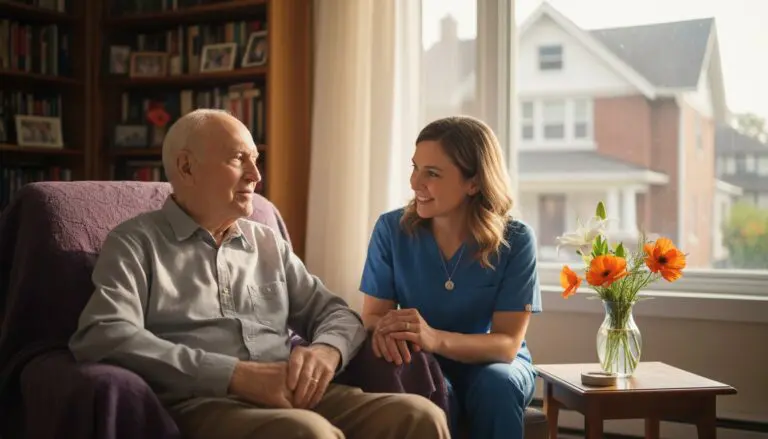

Dementia Care at Home in St. Thomas: A Practical Guide for Families (2026)
What if the most effective memory care environment isn’t a specialized facility, but the familiar living room where your loved one has spent the last thirty years? Many families in Ontario feel an immediate sense of guilt when they realize they can’t manage every safety concern or medical appointment alone. It’s exhausting to balance your own life while trying to decipher complex provincial health systems. You want your parent to stay safe, but you also want them to feel like themselves in their own space.
Finding quality dementia care at home St Thomas allows seniors to maintain their dignity in a place they recognize. At Cocoon Senior Services, we believe professional support should feel like a natural extension of the family. This guide shows you how specialized care in London and surrounding areas can transform a stressful situation into a manageable, peaceful routine. We’ll explore practical home safety tips for 2026, how to access local resources, and ways to secure reliable respite care so you can finally rest.
Key Takeaways
-
Understand how specialized dementia care at home St Thomas preserves dignity and cognitive health by allowing seniors to age safely in familiar surroundings.
-
Learn the vital differences between basic housekeeping and the specialized cognitive support provided by certified dementia care professionals.
-
Navigate the realities of Ontario Health atHome service limits and discover how to bridge the gap to prevent family caregiver burnout.
-
Gain practical, immediate strategies for creating a safer home environment through essential modifications and effective communication techniques.
-
Explore how Cocoon Senior Services offers a personalized, expert-led alternative to large franchises for families in London and surrounding areas.
Table of Contents
-
Understanding the Need for Dementia Care at Home in St. Thomas
-
Specialized Support: How Dementia Care Differs from Standard Home Care
-
Navigating the Gap: Private Care vs. Government Support in Ontario
Understanding the Need for Dementia Care at Home in St. Thomas
For many families, Understanding Dementia is the first step toward creating a safe environment. Dementia care at home in St Thomas isn’t just about supervision. It’s specialized support designed to stabilize cognitive health and protect emotional well-being. By focusing on the individual’s history and personality, care providers help seniors maintain a sense of self. This approach prioritizes the person over the diagnosis, ensuring every interaction is rooted in dignity and calm. It’s about creating a space where the senior feels understood rather than managed.
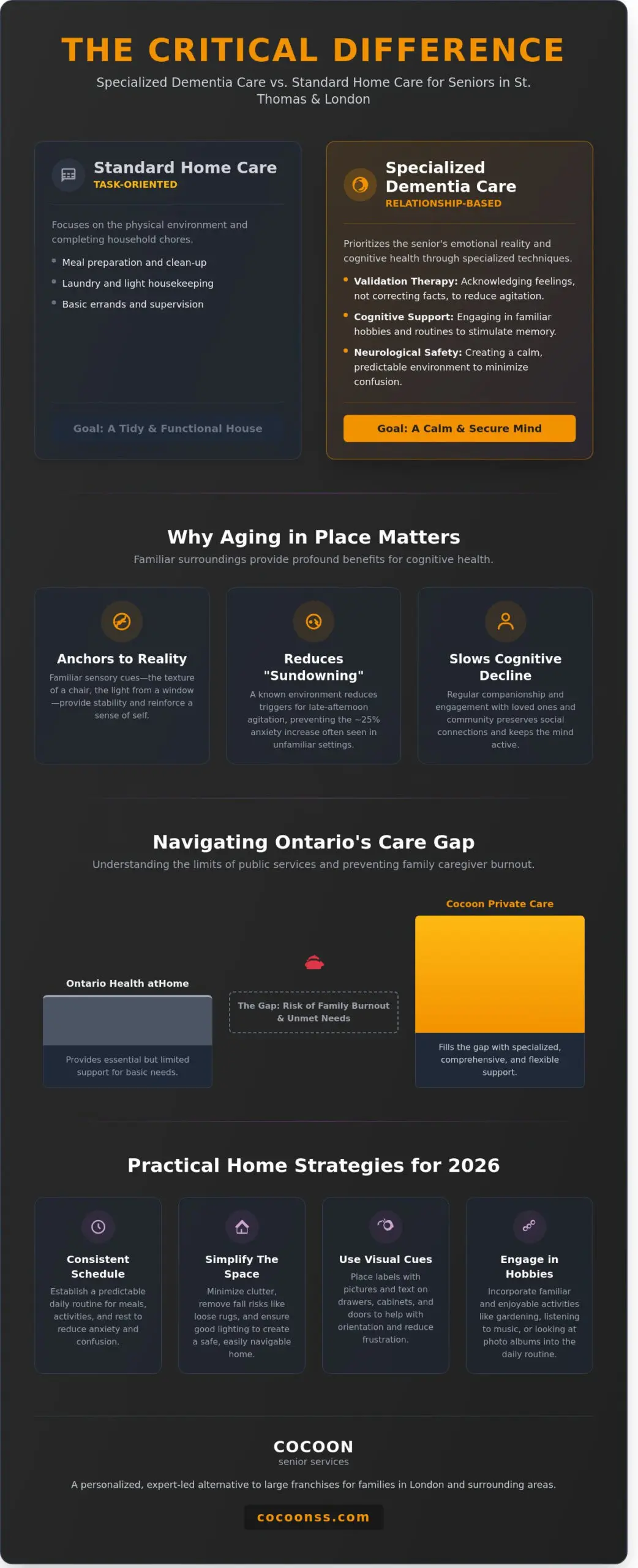
Aging in place offers profound benefits for those experiencing memory loss. Familiarity acts as a silent caregiver. When a senior stays in their own home, they’re surrounded by the soft textures of their favorite chair and the specific light of their living room. These sensory cues anchor them to reality. This stability is crucial for managing "sundowning," a state of increased confusion and agitation that often occurs in the late afternoon. Staying in a known environment reduces these triggers. It allows for a gentle transition through the stages of the disease without the trauma of a clinical setting.
To better understand how this specialized support can be integrated into daily life, watch this helpful video:
The demand for specialized senior services in London and surrounding areas has grown by approximately 20% over the last five years. As the population in Elgin County ages, families increasingly look for ways to avoid the disruption of institutional moves. Professional dementia care at home St Thomas provides a bridge, allowing seniors to receive high-level support without leaving the streets they’ve walked for forty years. It’s about maintaining a high quality of life while ensuring safety is never compromised. Practical steps for home care include:
-
Establishing a consistent daily schedule to reduce anxiety.
-
Simplifying the living space to minimize fall risks and confusion.
-
Using visual cues, such as labels on drawers or clear signage.
-
Engaging in familiar hobbies to stimulate memory and joy.
The Emotional Impact of a Diagnosis
A diagnosis often brings a wave of grief and heavy stress. It’s a life-altering moment for the entire family unit. Choosing professional support early is a proactive strategy, not a reactive one. It prevents caregiver burnout before it starts. Cocoon serves as a guide for families during these initial, often overwhelming, stages. Having a professional perspective helps clarify the path forward. It turns a period of uncertainty into a structured plan for comfort and security.
Why St. Thomas Families Choose In-Home Support
Residents in St. Thomas value their deep roots. Moving to a facility often means severing ties with neighbors and local shops. In-home support preserves these connections. Regular companionship is another vital factor; it’s proven to slow cognitive decline by keeping the mind engaged. Families in London and surrounding areas prefer this model because it integrates care into daily life. It keeps the senior an active participant in their community, surrounded by the textures and sounds they love.
Specialized Support: How Dementia Care Differs from Standard Home Care
Standard home care often focuses on the physical environment, such as folding laundry or preparing a nutritious meal. While these tasks are helpful, specialized cognitive support goes much deeper. It requires a shift from task-oriented help to relationship-based care that prioritizes the senior’s emotional reality. When families seek dementia care at home St Thomas, they’re looking for more than a tidy house; they’re looking for neurological safety. Professional caregivers use non-medical interventions like validation therapy. This technique involves acknowledging the senior’s feelings and current reality rather than correcting their facts. It’s a method that can reduce the 25% increase in anxiety often reported during "sundowning" periods in the late afternoon.
Certified training is the foundation of this specialized approach. Caregivers at Cocoon Senior Services study the progression of the brain’s changes, specifically how the frontal and temporal lobes affect communication and logic. Cocoon ensures that every care plan is a living document. It evolves as the senior moves through the different stages of the condition. For families navigating these changes, the Alzheimer Society of Canada offers essential dementia caregiver resources that help explain these complex shifts in behavior and memory.
Cognitive Engagement and Activities
Meaningful engagement isn’t about just keeping a senior busy. It’s about activating dormant neural pathways through tailored stimulation. We don’t just "play music"; we curate playlists from the senior’s early adulthood. Research shows that familiar melodies can improve mood for up to 6 hours after the music stops. We use tactile tools like puzzles or storytelling kits that align with the person’s professional history. If a senior spent 30 years as a librarian, we might engage them in organizing a personal collection by color or texture. Structured routines are equally vital. A consistent 10:00 AM walk or a 3:00 PM tea time lowers cortisol levels and provides a sense of predictability in a world that often feels confusing.
Personal Care with Dignity
Personal hygiene often becomes a point of friction as dementia progresses. A professional caregiver approaches bathing and dressing with a slow, patient rhythm that respects the individual’s privacy. We might use warm towels and soft lighting to minimize the sensory overload that often leads to resistance. Medication reminders are another critical component for health stability. Since nearly 50% of seniors with cognitive decline may struggle with medication adherence, having a professional present ensures doses aren’t missed or doubled.
Handling difficult behaviors, such as repetitive questioning or sudden agitation, requires a compassionate and expert touch. We don’t use confrontation. Instead, we use redirection to shift the senior’s focus to a comforting topic or a different room. This expertise allows family members to step back from the role of "monitor" and return to being a loving spouse or child. If you find yourself struggling to manage these daily transitions alone, exploring personalized support options can help bring a sense of calm back to your household in London and surrounding areas. Our goal is to provide a steady presence that adapts to your family’s unique needs every single day.
Navigating the Gap: Private Care vs. Government Support in Ontario
Ontario’s public home care system, managed by Ontario Health atHome, provides a vital safety net for seniors. However, it’s rarely designed to cover the 24/7 reality of memory loss. Most families in St. Thomas find that publicly funded personal support workers (PSWs) arrive for 45 to 60 minute task-based visits. They focus on bathing or dressing, then they leave. This leaves a massive void for the remaining 23 hours of the day. The gap between what the government provides and what a senior actually needs to live safely is where family burnout typically begins.
Recent 2023 data suggests that while the province has increased funding, many seniors still wait months for a consistent schedule. When government hours plateau, the burden falls on spouses or children. Private dementia care at home St Thomas addresses this by shifting the focus from basic clinical tasks to holistic well-being. It provides the lifestyle support that public programs omit, such as meaningful conversation, cognitive stimulation, and the simple pleasure of a shared meal. This approach transforms care from a series of medical appointments into a supportive partnership that respects the individual’s dignity.
Why Government-Funded Care Often Isn’t Enough
Publicly funded care relies on a "first available" staffing model. This means a different person might show up every Tuesday morning. For someone living with dementia, this lack of routine triggers anxiety and confusion. Private care ensures the same familiar, smiling face arrives for every visit, which is vital for maintaining a sense of security. Additionally, government eligibility criteria are often rigid. If a senior is deemed "stable," their hours may be reduced, even if the primary family caregiver is reaching a breaking point.
-
Limited Hours: Public support often caps at 14 to 28 hours per week for even the highest-need cases.
-
Task-Oriented Care: Government PSWs are often prohibited from doing light housekeeping or preparing complex meals.
-
Inconsistent Scheduling: Arrival times often fluctuate based on the agency’s daily staffing levels.
Supplementing Public Services in St. Thomas
You don’t have to choose between public and private options. Many families in London and surrounding areas use a hybrid model to ensure comprehensive coverage. While a public nurse might handle specialized medication or wound care, private support handles the emotional and domestic rhythm of the day. This coordination ensures that dementia care at home St Thomas feels seamless rather than fragmented. Cocoon Senior Services works alongside existing support networks to fill the quiet hours when family members need to work or sleep.
Using private respite care offers several practical advantages for families:
-
Flexible Respite: Private care can be booked for 4, 8, or 12-hour blocks to give family caregivers a true break.
-
Integrated Domestic Support: Private caregivers can manage laundry, grocery shopping, and meal prep that public workers cannot.
-
Professional Coordination: Lisa and the team ensure that private visits don’t overlap with government nursing appointments.
In Ontario, family caregivers provide an estimated 75% of the care required by seniors. Without supplemental support, this level of pressure is unsustainable. By choosing a private agency, you gain the flexibility to adjust care levels as needs change. Whether it’s adding an extra afternoon of companionship or overnight monitoring, private care adapts to your family’s life, not the other way around. This ensures that your loved one remains in their familiar environment while receiving the premium, attentive care they deserve.
Practical Tips for Managing Dementia at Home
Managing a loved one’s condition requires a blend of patience and proactive planning. When you’re organizing dementia care at home St Thomas, the goal is to reduce frustration while maximizing independence. Safety isn’t just about preventing falls; it’s about creating a predictable world where your loved one feels secure. Small changes in the environment can lead to significant improvements in daily mood and cooperation.
Start with these five immediate safety modifications:
-
Upgrade Lighting: Install motion-sensor LED lights in hallways and bathrooms. Use bulbs in the 3000K to 5000K range to mimic natural daylight, which helps reduce "sundowning" confusion.
-
Remove Trip Hazards: Take away all area rugs, even those with non-slip backing. Clear away loose electrical cords and low-profile furniture like coffee tables.
-
Visual Contrast: Use high-contrast tape on the edges of stairs. Switch to solid-coloured dinnerware that contrasts with the table, as this helps seniors see their food more clearly.
-
Appliance Safety: Install a C$50 automatic stove shut-off device. This prevents kitchen fires if a burner is left unattended.
-
Bathroom Support: Place non-slip mats inside and outside the tub. Install grab bars near the toilet and shower that are bolted into the wall studs, not just suctioned.
Effective communication changes as the disease progresses. Stick to short, five-to-seven-word sentences. If you’re asking a question, offer two clear choices instead of open-ended queries. Non-verbal cues matter just as much as speech. A gentle touch on the shoulder or a calm facial expression often conveys more than a long explanation. Always maintain eye contact at the same level as your loved one to avoid appearing overbearing.
Wandering affects approximately 60% of people living with dementia. Use simple door alarms or "stop" signs on exit points to discourage leaving the home unattended. In the kitchen, keep sharp knives and heavy appliances in locked cabinets. These steps provide a layer of protection that allows for a more relaxed atmosphere for everyone in the house.
Caregiving is demanding; statistics from the Alzheimer Society of Canada show that nearly 25% of family caregivers are "sandwiched" between caring for parents and children. You can’t provide quality support if your own health fails. Schedule regular breaks. Even a 30-minute walk or a professional respite session can lower your cortisol levels and prevent long-term burnout.
Creating a Safe Physical Environment
Clear paths are essential for mobility. Remove clutter and loose cords from walking areas immediately. Use clear, large-print labels on cupboards to identify where glasses or plates are kept. This reduces cognitive load and frustration. Secure medications and cleaning supplies in a locked cupboard. For families seeking dementia care at home St Thomas, these physical adjustments are the first step toward a sustainable and peaceful daily routine.
Daily Management Strategies
Dehydration often leads to increased confusion and urinary tract infections. Offer water or herbal tea every hour in a brightly coloured cup. When it comes to appointments, the logistics can be overwhelming. Professional transportation support ensures your loved one arrives on time without the stress of parking. For more daily care tips, follow Cocoon on Facebook.
Maintaining a sense of calm in the home requires the right resources and a dedicated support system. If you need assistance managing these daily challenges, explore how Cocoon Senior Services can help your family find balance.
Personalized Support with Cocoon Senior Services
Choosing the right support for a loved one is a significant decision. Cocoon Senior Services offers a local, expert-led alternative to large, faceless franchises. While national chains often deal with high staff turnover rates, which hit 64% in the home care sector in 2023, our focus remains on stability and deep personal connections.We serve London and surrounding areas, ensuring that our clients receive the attention they deserve from a team that truly knows the community.
Our approach begins with a thorough 90 minute initial assessment. We don’t just look at a checklist of tasks. We look at the person. This meeting allows us to understand the senior’s history, their current cognitive state, and the specific challenges their family faces. Following this, Lisa develops a tailored care plan. This document outlines specific goals, from maintaining physical mobility to providing cognitive stimulation. It’s a flexible roadmap that changes as the senior’s needs evolve, ensuring that dementia care at home St Thomas remains effective over the long term.
The Cocoon Difference in London and Surrounding Areas
We provide non-medical, holistic support designed to keep seniors independent in their own homes. Data from the National Institute on Ageing in 2022 shows that 85% of Canadians over the age of 65 want to age in place. We make that possible by focusing on the whole person. Our care isn’t about just "watching" a client; it’s about active engagement. This might include meaningful conversation, guided walks, or assistance with hobbies that spark joy and memory recall.
Consistency is our hallmark. We know that for someone living with memory loss, a new face every day causes unnecessary stress. We prioritize building real relationships. When the same professional visits every time, they notice the small changes in mood or health that a stranger might miss. This level of detail is what sets us apart. You can see more about our professional network and how we stay connected to industry standards by visiting our LinkedIn profile.
Next Steps for Your Family
Taking the first step is often the hardest part for families. You can book a consultation today to discuss your specific situation and see how we can help. During the first home visit, Lisa meets with you and your loved one in a relaxed, no-pressure environment. She observes the home’s layout to identify any safety risks and talks with the senior to establish a rapport. This visit isn’t an interrogation; it’s a conversation meant to build trust and comfort from day one.
St. Thomas has a growing senior population, with over 20% of residents now aged 65 or older. As the demand for specialized support grows, having a trusted local partner becomes even more vital. We’re here to shoulder the burden so you can focus on being a daughter, son, or spouse again. If you’re ready for professional, compassionate dementia care at home St Thomas, reach out to us. We’ll help you create a plan that brings peace and order back to your daily life. Don’t wait for a crisis to happen before seeking the support your family needs today.
Take the Next Step Toward Quality Care in 2026
Managing cognitive decline requires a strategy that evolves with your family’s needs. You’ve seen how specialized dementia care at home St Thomas differs from standard support by focusing on engagement rather than just task completion. Navigating the C$30 to C$60 hourly range for private care in Ontario alongside government programs ensures your loved one receives consistent attention. Data indicates that 44% of Canadian caregivers report high distress levels; professional support is a necessity for long-term health and safety.
Cocoon Senior Services provides personalized, non-medical care plans designed to maintain independence. Our team focuses on delivering reliable support throughout London and surrounding areas. We help you bridge the gap between public funding and the high-quality daily life your family deserves. It’s possible to find peace of mind while keeping your loved one in the environment they know best.
Ready to build a supportive plan? Book a consultation for dementia care in London and surrounding areas to start your journey today. You aren’t alone in this process.
Frequently Asked Questions
How much does dementia care at home cost in St. Thomas?
Private dementia care in St. Thomas typically costs between C$32 and C$48 per hour. These rates fluctuate based on the specific needs of the senior and the level of specialized training the caregiver possesses. Families often find that consistent, scheduled visits are more cost-effective than emergency or ad-hoc care arrangements.
Is government funding available for private dementia care in Ontario?
The Ontario government provides support through Home and Community Care Support Services, though this usually covers only a few hours of basic care per week. Families can also claim the Ontario Caregiver Tax Credit, which offers up to C$7,962 in tax relief for those supporting impaired relatives. Many clients use these credits to supplement the personalized services provided by Cocoon Senior Services.
What is the difference between dementia care and Alzheimer’s care?
Alzheimer’s care is a specific type of support tailored to the most common cause of cognitive decline, which accounts for nearly 70% of all dementia cases. Dementia care is a broader term that includes support for other conditions like vascular or Lewy body dementia. Both approaches prioritize safety and routine, but Alzheimer’s care often focuses more heavily on specific memory-loss patterns.
How do I know if it is time for professional dementia care?
It’s time for professional dementia care at home in St Thomas when a senior’s safety is compromised by wandering or forgotten appliances. If the primary caregiver feels constant exhaustion or their own health begins to decline, professional intervention is necessary. Early support helps manage the 60% of dementia patients who will experience wandering during their illness.
Can a person with advanced dementia stay at home?
Yes, individuals with advanced dementia can remain at home safely with a comprehensive 24 hour care plan and environment modifications. Staying in familiar surroundings often reduces the anxiety and confusion that 80% of seniors experience when moving to a facility. Professional caregivers provide the intensive monitoring and behavioral support required during the later stages of the disease.
What services are included in dementia home care in London and surrounding areas?
Dementia care in London and surrounding areas includes meal preparation, medication reminders, and specialized cognitive engagement. Caregivers focus on maintaining a calm environment through light housekeeping and personalized companionship. These services are designed to support daily living while ensuring the senior stays active and connected to their personal history.
How does respite care help family members in St. Thomas?
Respite care provides St. Thomas families a necessary break, which reduces the risk of caregiver burnout that affects 1 in 3 family providers. It allows you to focus on your own health and responsibilities while knowing your loved one is in professional hands. This temporary support is a practical way to extend the time a senior can safely live in their own home.
Disclaimer
We aim to provide helpful guidance for seniors and families, but this content should not replace professional medical advice. Some links may be affiliate links, and we are not responsible for third-party content.